
India is generally welcoming to travellers, but unfamiliar systems, busy transport hubs and tourist-heavy areas can create opportunities for scams and overcharging. These situations are not always dramatic or easy to recognise: a driver may quote an unclear fare, a tout may offer an unofficial ticket, or a helpful stranger may pressure you to change your plans. This guide discusses common scams, tourist traps and theft risks without stereotyping local people or portraying India as unsafe. The aim is practical awareness, not suspicion . By checking prices, using official or established booking channels, confirming directions and giving yourself time to make decisions, you can reduce avoidable problems while remaining respectful and open to genuine interactions. It is also useful to understand that risks can vary between destinations, seasons and situations, so sensible precautions should be adapted to your itinerary rather than applied as blanket assumptions. When something feels rushed, unusually complicated or too good to be true, pause and verify it.
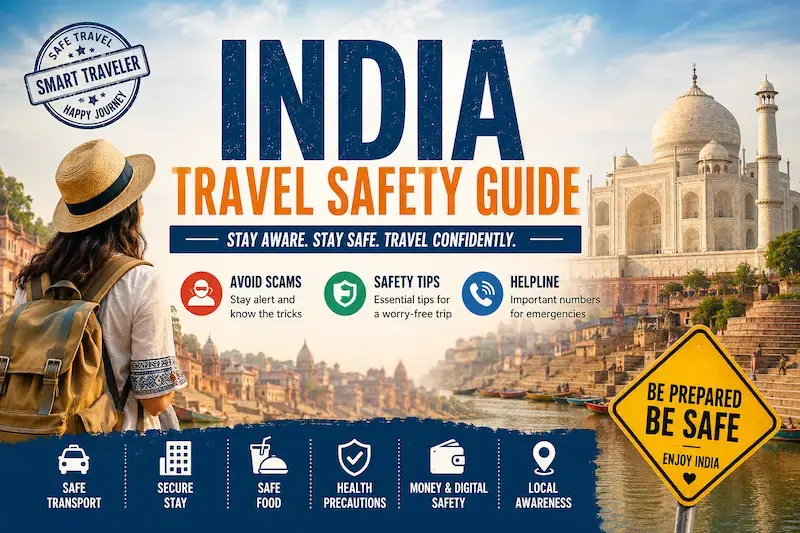
Is India Safe for Tourists?
India is safe and rewarding destination when travellers plan thoughtfully and follow sensible precautions. Because the country is large and diverse, safety conditions and travel experiences can vary between destinations, seasons and situations. Rather than viewing India as simply “safe” or “unsafe,” it is more useful to consider your destination, transport, accommodation and the situations where extra awareness may be helpful.
Most visitors complete their trips without serious problems. However, busy railway stations, markets, religious sites and transport hubs can be overwhelming, particularly for first-time visitors. Keep valuables secure, avoid displaying large amounts of cash, confirm prices before accepting services and use recognised transport or booking channels whenever possible.
Travellers should also be aware of personal boundaries and local customs. Dress respectfully at religious sites, ask before photographing people and avoid interactions that feel unnecessarily pressuring. Solo travellers may prefer well-reviewed accommodation, keep someone informed of their itinerary and take additional care when travelling at night.
Good preparation also helps with practical risks. Check regional conditions before travelling, keep important documents and emergency contacts accessible, and consider appropriate travel insurance. These precautions are not reasons to be fearful or suspicious; they are simple ways of travelling more confidently.
India is best approached with curiosity balanced by practical judgement. Being aware of common risks while remaining open to genuine interactions can help you enjoy the country without allowing isolated negative experiences to define your view of India or its people.
Common Scams, Tourist Traps & Theft Risks at a Glance
Scams and tourist traps can take different forms depending on where you are travelling and the services you use. The table below highlights common situations travellers may encounter, the warning signs to watch for, and simple precautions that can help you avoid unnecessary problems during your trip.
| Category | Common Problems Travellers May Encounter | What to Watch For | How to Reduce the Risk |
|---|---|---|---|
| Transport Scams | Taxi/auto overcharging, unofficial drivers, unnecessary detours, hotel diversion claims, porter overcharging | Unsolicited offers, refusal to confirm fare, claims that your hotel or transport is unavailable | Use recognised transport services, confirm fares beforehand and verify information independently |
| Accommodation Scams | Fake listings, fake booking agents, hotel diversion scams, unexpected charges | Requests for payment outside the booking platform, unusual changes to your booking, claims that the property is closed | Book through established platforms and contact the property directly when something seems unusual |
| Food & Restaurant Scams | Inflated bills, unclear charges, unwanted items, misleading recommendations | No visible prices, unexplained charges, pressure to order additional items | Check prices before ordering and review the bill before paying |
| Shopping Scams | Inflated tourist prices, fake discounts, commission-based shops, questionable gemstones, carpets or handicrafts | High-pressure sales, unrealistic claims, “special tourist price” offers | Compare prices, avoid rushed purchases and get receipts where appropriate |
| Tour & Activity Scams | Fake tour operators, unofficial guides, fake tickets, misleading packages | Very cheap offers, unsolicited guides, pressure to pay immediately | Verify the operator, ticket source and inclusions before paying |
| Money & Digital Payment Scams | Incorrect payment amounts, fake QR codes, payment manipulation, ATM assistance scams | Someone insisting on handling your payment or card, unfamiliar payment recipient | Check the amount and recipient before confirming and avoid unsolicited payment assistance |
| Donation Pressure | Donation pressure, unofficial fees, paid services presented as mandatory | Claims that a payment is compulsory, aggressive requests for money | Ask about charges beforehand and politely decline unsolicited requests |
| Fake Police & Impersonation Scams | People pretending to be police or officials, demands to inspect money/documents, intimidation for payment | Unusual demands, threats, requests for cash or personal information | Stay calm, ask for identification, avoid handing over cash and seek help from legitimate authorities |
| Pickpocketing & Theft | Pickpocketing, bag theft, chain snatching and other opportunistic theft | Crowded areas, distraction attempts, belongings placed in accessible pockets | Keep valuables secure, use zipped bags and remain particularly attentive in crowded places |
| Online & Booking Scams | Fake travel websites, fake customer-support numbers, fraudulent accommodation or tour offers | Unusually low prices, urgent payment requests, suspicious websites or messages | Verify websites and contact details before paying and use established booking services |
Note on Perspective: Not every unpleasant experience is a scam. Travellers may encounter deliberate fraud, but also overcharging, aggressive selling, unofficial services, or opportunistic theft. The risks mentioned above do not represent all taxi drivers, hotels, restaurants, or guides in India. These are potential situations a small number of travellers may encounter, particularly in busy tourist areas. Most people you meet will simply be providing normal travel services.
How to Avoid Common Scams & Tourist Traps in India
Travellers can encounter different types of scams, tourist traps, overcharging and opportunistic theft depending on where and how they travel. The following sections focus on situations worth recognising, common warning signs and practical precautions. They are intended to improve awareness and help you make informed decisions without encouraging unnecessary suspicion or fear and stereotyping people, places or professions.
Transport Scams
Transport-related problems are among the situations travellers may encounter, particularly around airports, railway stations and busy tourist areas.
Common examples: Unclear taxi or auto-rickshaw fares, inflated prices, unnecessary detours, claims that a booked service is unavailable, or unsolicited offers to take you to another hotel or shop.
Precaution: Use official or prepaid taxi services, recognised ride-hailing apps or other trusted transport options. Confirm the fare before travelling and check the route to your destination.
Accommodation Scams
Accommodation problems can affect travellers who book through unfamiliar websites, respond to unsolicited offers or arrive at a destination without verifying their reservation.
Common examples: Fake accommodation listings, misleading property information, unexpected payment requests, or someone claiming that your booked hotel is unavailable and offering an alternative property.
Precaution: Book through established platforms or directly with the property. Check recent reviews, verify contact details and be cautious about unexpected requests to transfer money to personal accounts.
Food & Restaurant Scams
Most restaurants provide normal services, but travellers unfamiliar with local prices or menus can sometimes face unclear charges or pressure to order particular items.
Common examples: Unclear menu prices, items added to the bill without explanation, unusually high charges, or recommendations from people who may benefit from taking you to a particular restaurant.
Precaution: Check prices before ordering and review the bill carefully. Ask about anything unclear and choose restaurants with transparent menus and recent reviews.
Shopping Scams
Shopping can be an enjoyable part of travelling in India, but tourists may sometimes face aggressive selling, inflated prices or misleading claims about products.
Common examples: Excessive pricing, questionable product claims, pressure to buy immediately, counterfeit goods or emotional stories designed to encourage a purchase.
Precaution: Compare prices at different shops and take your time before buying. For expensive products, request a proper bill and relevant authenticity, warranty or product documents where applicable.
Tour & Activity Scams
Tour and activity problems can occur when travellers book with unfamiliar operators or accept unsolicited offers for supposedly special tours, tickets or experiences.
Common examples: Fake guides, misleading tour descriptions, unexpected fees, cancelled activities after payment or claims of exclusive access to attractions.
Precaution: Use reputable tour operators and confirm exactly what is included before paying. Check recent reviews, cancellation terms, meeting points and additional charges.
Money & Digital Payment Scams
Payment-related problems can be particularly difficult for travellers because mistakes involving cash, cards or digital payments may not always be easy to recover.
Common examples: Incorrect change, confusing exchange rates, fake payment requests, manipulated QR codes, fraudulent payment links or requests for OTPs, PINs or banking information.
Precaution: Confirm the amount before paying and count your change. Use trusted payment methods and never share your OTP, PIN, password or banking credentials.
Donation Pressure
Travellers visiting popular cultural and heritage areas may sometimes be approached by people asking for donations, payments or contributions.
Common examples: Unsolicited requests for donations, contributions or services followed by pressure to pay unexpectedly large amounts.
Precaution: You do not have to pay simply because someone approaches you. If you genuinely want to donate, consider using an established organisation or an official donation channel.
Fake Police & Other Impersonation Scams
Impersonation scams rely on creating fear or urgency by claiming that the traveller has broken a rule or must immediately provide money or personal information.
Common examples: People pretending to be police officers, government officials, security employees or other authorities and demanding money, documents or immediate action.
Precaution: Stay calm and ask for identification. Do not hand over cash or sensitive information simply because someone claims to have authority. If necessary, verify the situation through a legitimate police station or official office.
Pickpocketing, Chain Snatching & Other Theft Risks
Crowded markets, public transport and busy tourist areas can create opportunities for opportunistic theft, especially when travellers are distracted by their surroundings.
Common risks: Pickpocketing, bag theft, chain snatching, distraction techniques and attempts to separate travellers from their valuables.
Precaution: Keep valuables secure and avoid displaying large amounts of cash or expensive items. Use zipped bags, stay alert in crowded places and keep important documents and backup payment methods separately.
Online & Booking Scams
Online scams can happen before or during a trip when travellers use unfamiliar websites, social media accounts or links that appear to belong to genuine travel providers.
Common examples: Fake booking websites, fraudulent accommodation or transport offers, copied websites, misleading discounts, fake customer-support messages and requests to make payments outside the original platform.
Precaution: Check the website address carefully and use established booking platforms or official provider websites. Avoid unexpected payment links and verify important bookings directly with the provider.
What to Do If Something Goes Wrong
Even well-planned trips can involve lost belongings, missed connections, misleading information or an uncomfortable interaction. If something goes wrong in India, focus first on reaching a safe, public and staffed location rather than trying to resolve the situation immediately. If possible, seek assistance from your accommodation, an airport or railway-station help desk, or a legitimate police facility.
For an immediate threat, accident or medical emergency, call India’s national emergency number, 112. The Ministry of Tourism also operates a 24-hour multilingual tourist helpline on 1363 or 1800-11-1363 for travel information and assistance. Save these numbers before your trip, along with your accommodation’s contact details and your country’s embassy or consulate information.
If money or documents are lost, block your cards promptly, inform your bank and record the time and details of the incident. For a lost passport, contact your embassy or consulate for guidance and report the loss to the local police if required. Keep digital copies of your passport, visa, insurance policy and important bookings in secure cloud storage, but avoid sharing them publicly.
When dealing with a suspected scam or dispute, remain calm and avoid threats or arguments. Do not hand over your passport, personal information or payment simply because someone is applying pressure or claiming authority that you cannot verify. Note names, vehicle numbers, receipts, booking references and locations; photographs or screenshots may also help when making a formal complaint.
Tell a trusted person what happened and consider your next step before making further decisions. Seeking help is not an admission of poor planning. Prompt reporting, clear records and a calm response can often prevent a minor problem from becoming a larger one.
India Travel Safety Checklist
Use this checklist before and during your trip to reduce avoidable problems while keeping your plans flexible. Safety considerations can vary by destination, season and activity, so check current local conditions and official advice before travelling.
Before You Leave
Research the specific cities, regions and border areas on your itinerary.
Check weather, transport conditions, local regulations and relevant government travel advisories.
Book accommodation with recent reviews and a clearly listed address.
Save your accommodation, transport provider, embassy or consulate and insurance contacts.
Keep digital and printed copies of your passport, visa, insurance and key bookings.
Share your itinerary and expected arrival times with someone you trust.
Consider suitable travel insurance, including medical support and activity coverage.
Carry essential medicines, a basic first-aid kit and emergency contact information.
During Your Trip
Use established booking platforms, official or prepaid taxi services, or reputable transport apps.
Confirm fares, inclusions and cancellation terms before accepting a service.
Keep your phone, wallet and passport secure in crowded places.
Avoid displaying large amounts of cash or expensive jewellery.
Stay aware of your surroundings at stations, markets, festivals and major attractions.
Dress respectfully at cultural sites and ask before photographing people.
Take additional care around isolated areas after dark, particularly when travelling alone.
Drink treated or sealed water where appropriate and protect yourself from excessive heat.
Choose established operators for trekking, boating, diving and other adventure activities.
If Something Goes Wrong
Move to a safe, populated place and contact your accommodation or someone you trust.
Call 112 for an immediate emergency. India’s tourist helpline is available on 1363 or 1800-11-1363.
Block lost cards promptly, report theft to the police when appropriate and keep a record of the incident.
Do not hand over your passport, personal information or payment to someone whose identity or authority you cannot verify.
Record names, vehicle numbers, receipts, booking details and locations. Keep photographs or screenshots when appropriate.
My Approach to Staying Safe While Travelling in India
Living in India has taught me that staying safe while travelling is less about avoiding every unfamiliar situation and more about preparing well, paying attention and making sensible decisions. I do not treat every stranger as a threat, nor do I assume that every problem will resolve itself. I try to balance openness with awareness.
Before leaving, I check the route, weather, transport options and accommodation details. I save important phone numbers, keep my identification secure and share my basic itinerary with someone I trust. For unfamiliar journeys, I prefer established transport services and confirm fares before starting. If a plan involves a remote area, a late arrival or an outdoor activity, I arrange the practical details in advance rather than depending on last-minute help.
In crowded places, I keep my phone and wallet secure and avoid displaying unnecessary cash or valuables. At cultural and heritage sites, I dress respectfully, follow local instructions and ask before taking photographs. I also pay attention to food, water, heat and traffic, because ordinary travel inconveniences can become more serious when ignored.
I stay polite, but I do not allow politeness to override my judgement. If someone pressures me to buy a ticket, change a booking, enter a vehicle or share personal information, I pause and verify the details independently. When something goes wrong, I move to a public place, contact someone I trust and seek help from the police, official staff or my accommodation.
For me, safe travel in India is not based on fear or suspicion. It comes from preparation, respect for local communities and the confidence to say no when a situation feels uncomfortable.