
Planning how to travel around India can be challenging because the country is geographically vast, and transport and accommodation options vary considerably between destinations. Travelling between major cities may be convenient by train or flight, while reaching a mountain village, coastal town, wildlife area, or remote cultural site may require buses, taxis, ferries, or a combination of transport. Accommodation also ranges from hostels and homestays to business hotels, heritage properties, resorts, and luxury camps.
The most suitable choice depends on several factors, including distance, budget, available time, comfort, destination, and travel style. This guide explains how to compare India’s main transport options, choose accommodation in a convenient location, understand the practical trade-offs between different choices, and plan travel arrangements for solo, couple, family, budget, and luxury trips.

How to Travel Around India
Travelling around India requires more than choosing between trains and flights. Distances are substantial, and road and traffic conditions vary, so the most practical option can change completely between a major city, a Himalayan town, a coastal village, and a wildlife destination. Trains are often useful for long overland journeys, while domestic flights can save time on widely separated routes. Buses, taxis, metros, ferries, and shared vehicles usually complete the last part of the journey. Booking, connections, luggage, and local transfers can also affect the real cost and convenience. This guide explains how to compare India’s main transport options, when to choose each one, how to plan intercity and local journeys, and what to consider based on your budget, schedule, comfort level, and travel style.
Choosing the Best Way to Travel Around India
There is no single best way to travel around India. The right choice depends on how far you are going, how much time you have, what you want to spend, and how much comfort you expect during the journey. A train may be the most practical option for an overnight route, while a flight can make more sense when two destinations are separated by a long distance. Buses and shared vehicles are often more useful for reaching smaller towns and areas without direct rail connections, while taxis, metros, auto-rickshaws, and ferries handle local and destination-specific travel.
Compare the complete journey rather than looking only at the ticket price. Consider transfer times, waiting periods, luggage, local transport, and the final connection to your accommodation.
| Transport Option | Best Suited For | Main Advantage | Main Limitation | Key Logistics & Planning Tip |
|---|---|---|---|---|
| Train | Medium and long-distance intercity routes (approximately 300–1,200 km). | Excellent balance of affordability and comfort. Sleeper berths can make overnight travel more practical while potentially saving a hotel night. | Popular routes can sell out well in advance, while journey times can be considerably longer than flying. | Book through official Indian Railways channels where possible. Consider 2AC/3AC or suitable premium services when comfort is a priority. |
| Flight | Long-distance travel, tight schedules, and cross-country connections. | Can dramatically reduce travel time on long journeys, turning lengthy overland routes into relatively short flights. | Higher fares on some routes, baggage restrictions, and additional time required for airport transfers, security, and check-in. | Compare total door-to-door travel time and allow extra time for airport transfers, particularly when airports are far from city centers. |
| Bus | Regional and short-to-medium intercity journeys, including destinations without convenient rail connections. | Often available on short notice and can reach remote regions, smaller towns, and hill stations. | Journey times can be affected by highway traffic, while comfort varies by operator, vehicle, and road conditions. | For overnight journeys, consider reputable operators offering premium AC sleeper or semi-sleeper services. |
| Taxi / Private Car | Flexible multi-stop journeys, family travel, and destinations away from major transport corridors. | Provides door-to-door convenience, flexible sightseeing stops, and greater control over the pace of a journey. | Usually more expensive for solo travelers and can be affected by traffic and long-distance driving conditions. | For multi-day journeys, use a reputable operator or experienced local driver and confirm the vehicle, inclusions, and pricing before departure. |
| Metro Rail | Daily commuting and rapid sightseeing within congested major cities. | Fast and economical in cities with extensive metro networks, while avoiding much of the road traffic. | Coverage is limited to cities and areas served by the metro network, so additional transport is often required. | Check the current network map, operating hours, ticketing options, and interchange points before planning a sightseeing route. |
| Auto-Rickshaw | Short local journeys, narrow old-city lanes, and quick point-to-point transfers. | Maneuverable in dense traffic and convenient for short journeys where larger vehicles may be impractical. | Less comfortable for long journeys or luggage-heavy transfers, with fares varying by location and booking method. | Where available, use reputable ride-hailing platforms or agree on the fare before starting a street-hailed journey. |
| Ferry / Waterway | Specific coastal crossings, island journeys, and selected river or backwater routes. | Provides access to destinations that may be difficult to reach by road while offering a scenic alternative to land transport. | Routes are highly localized and services can be affected by weather, sea conditions, water levels, or seasonal disruptions. | Check the latest sailing schedule and operating conditions before departure, particularly during monsoon periods or for island crossings. |
The availability of a particular option should be the starting point. A transport mode may appear attractive in general but may not make sense if it requires several additional connections to reach your final destination.
Main Transport Options for Travelling Around India
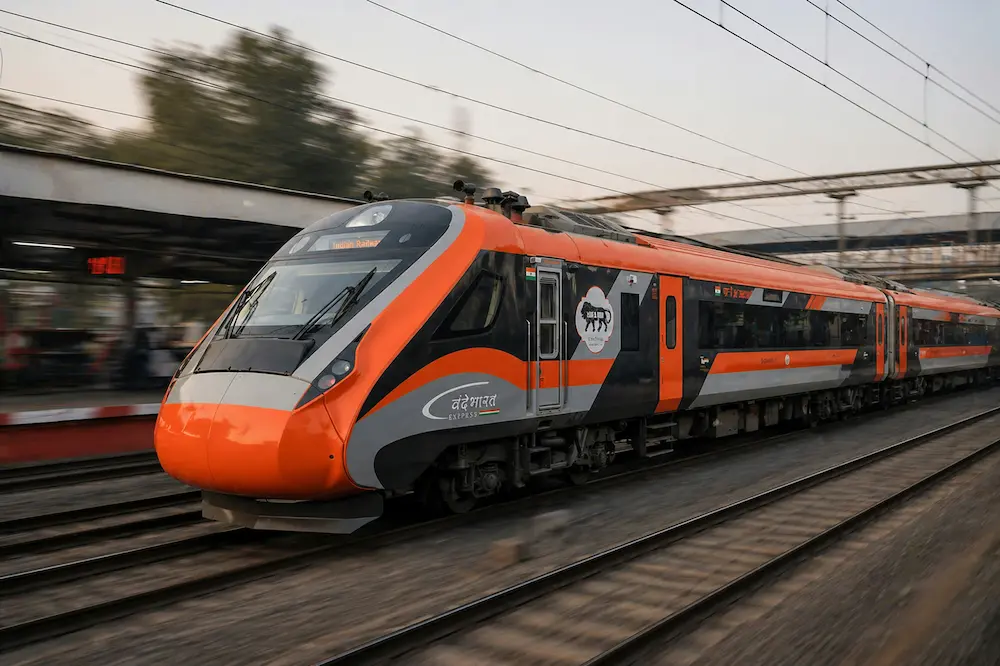
Trains offer several types of services and classes, allowing travellers to choose according to journey length, budget, and comfort priorities.
- Vande Bharat Express – premium semi-high-speed day trains on selected routes.
- Rajdhani Express – premium long-distance services connecting major cities with Delhi.
- Shatabdi Express – fast daytime services connecting major business and tourist hubs.
- Duronto Express – limited-stop point-to-point long-distance services.
- Superfast & Express Trains – economical options widely used for medium and long distances.
- Overnight Sleeper Trains – efficient for covering long distances while saving accommodation costs.
- Passenger & Local Trains – practical for shorter regional and suburban travel.
Domestic flights vary mainly by airline carrier, route frequency, schedule flexibility, and baggage allowances.
- Full-Service Carriers – include complimentary meals and higher checked baggage allowances.
- Low-Cost Carriers – focus on competitive base fares with add-on options.
- Direct Flights – fast travel between major airports without aircraft changes.
- Connecting Flights – require intermediate layovers, providing broader destination reach.
- Regional Flights – connect primary hubs to smaller tier-2 and tier-3 regional airports.
- Early-Morning Flights – ideal for maximizing full-day sightseeing on arrival.
- Evening & Night Flights – convenient for preserving full days at your departure city.

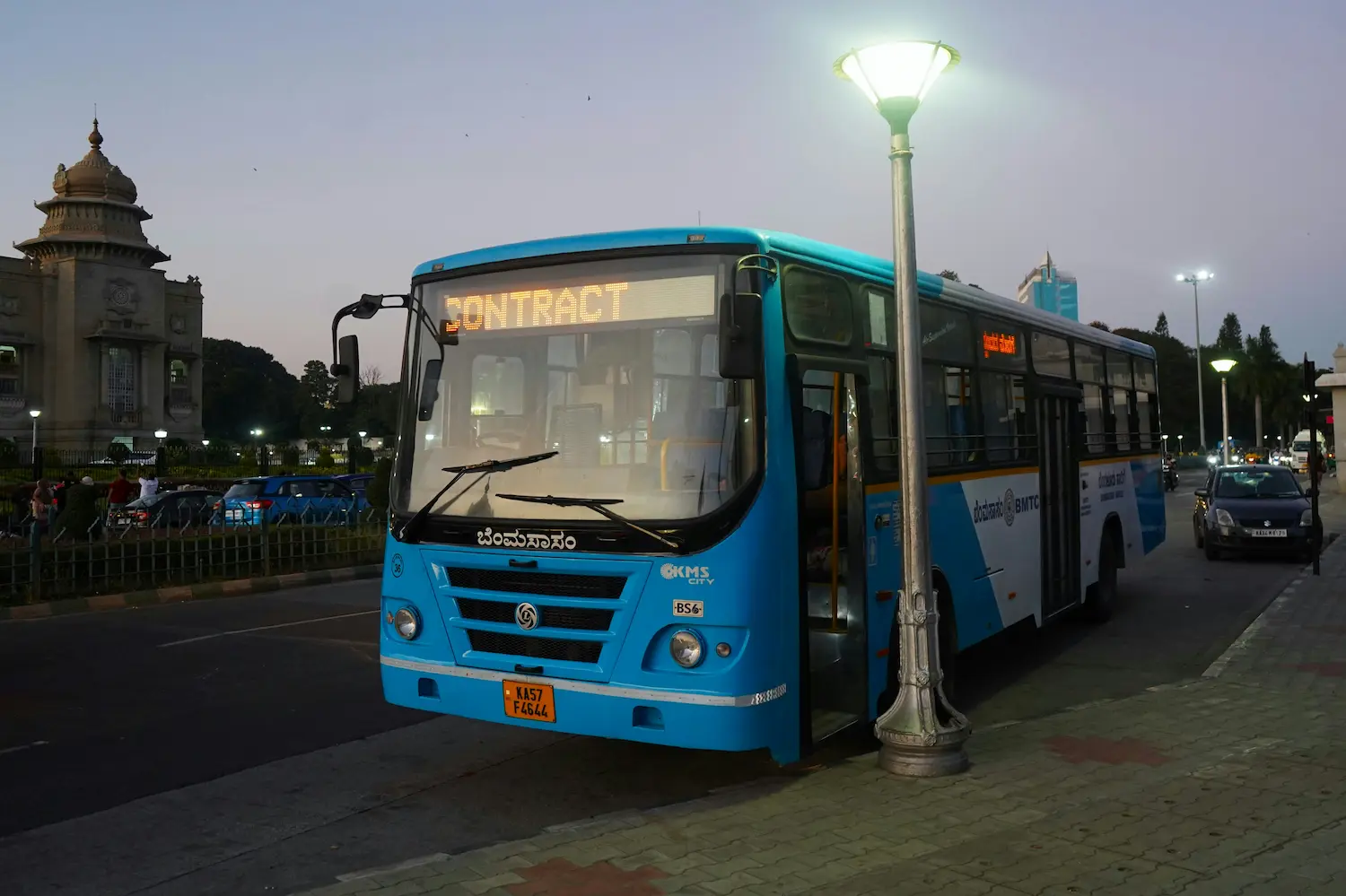
Buses cover extensive road networks, ranging from state transport corporations to luxury private sleeper coaches.
- Government Buses – reliable state-run transport operating across regional routes.
- Private Buses – provide flexible night schedules and varied comfort levels.
- Ordinary Buses – low-cost option best suited for short regional transfers.
- Express Buses – make fewer route stops for quicker intercity travel.
- AC Buses – climate-controlled coaches essential for hot summer journeys.
- Sleeper Buses – equipped with lay-flat berths for overnight intercity travel.
- Volvo & Scania Buses – premium air-suspended buses providing maximum road comfort.
- Mini & Local Buses – essential for navigating hilly terrain and remote villages.
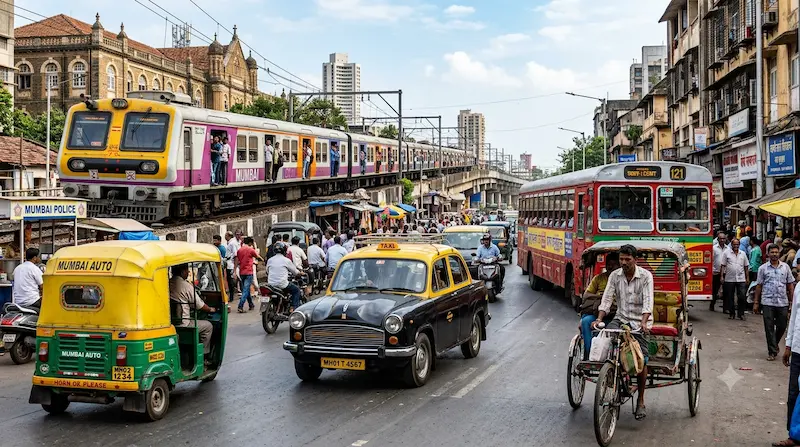
Local transport covers intra-city movement across urban centers, historic neighborhoods, and rural destinations.
- Metro Rail – rapid, air-conditioned urban rail bypassing city traffic gridlock.
- Suburban Local Trains – high-capacity rail transit in major metros like Mumbai and Chennai.
- City Buses – budget-friendly urban transport connecting central districts.
- Auto-Rickshaws – flexible three-wheeled transport ideal for narrow streets and short hops.
- App-Based Cabs (Uber/Ola) – door-to-door air-conditioned cars with upfront pricing.
- E-Rickshaws & Cycle Rickshaws – zero-emission short-distance options in bazaar areas.
- Ferries & Water Taxis – vital local transit across backwaters, islands, and river ports.
- Private Cars with Drivers – tailored day-hire solution for multi-stop city sightseeing.
Consider the Trade-Off Between Time, Cost and Comfort
The cheapest option is not always the most economical choice once the complete journey is considered. Similarly, the fastest option may not always be the most convenient.
A flight may reduce the time spent travelling between two distant cities, but the total journey also includes getting to the airport, arriving before departure, collecting luggage, and travelling from the destination airport to your accommodation. A train may take longer from station to station but can sometimes offer a more convenient city-centre-to-city-centre journey.
The same principle applies to buses and private vehicles. A lower-priced bus may be suitable for a traveller with plenty of time, while a private car may be worth the additional expense when travelling with family or visiting several places in one day.
When comparing transport options, consider:
Total travel time, not just the scheduled journey
Ticket or booking cost
Transfers to and from stations or airports
Waiting and connection times
Luggage requirements
Comfort during the journey
Arrival and departure times
Local transport after arrival
Flexibility if plans change
Choose Transport According to Your Itinerary
Plan transport around the shape of your itinerary, not simply the lowest fare. For nearby destinations, buses, trains, or private cars are often practical because they can reduce airport transfers and provide more direct access to smaller towns. Trains work well for many medium- and long-distance routes, particularly when an overnight journey can replace a hotel night. Flights become more useful when destinations are far apart or when you have only a few days and want to protect valuable sightseeing time.
For destinations without direct connections, combine transport modes: fly or take a train to the nearest major hub, then continue by road. Leave a realistic buffer between connecting tickets, especially when transferring from a train to a flight, and confirm the final connection before booking accommodation. Comparing the complete door-to-door journey gives you a more reliable basis for choosing transport than comparing ticket prices alone.
Book and Plan Transport in Advance
How far in advance you need to arrange transport depends on the route, season, and type of service. Popular long-distance trains, flights, and transport during major holidays or peak travel periods can require earlier planning, while local buses, taxis, and short journeys may offer more flexibility.
Before booking, check the departure and arrival locations carefully, as large cities may have multiple stations, terminals, or airports. For connecting journeys, allow enough time for delays and transfers rather than scheduling two tickets too close together. If your itinerary includes remote destinations, confirm how you will travel from the nearest transport hub to your accommodation before finalising the booking.
Practical tip: For important connections, avoid building an itinerary around the assumption that every service will run exactly on schedule. A little flexibility can make a multi-stop India trip considerably easier to manage.
Where to Stay in India
Choosing where to stay in India is not simply a matter of selecting the cheapest room or the highest-rated property. Accommodation affects how easily you can reach attractions, manage daily transportation, rest between activities, and stay within your budget. A centrally located hotel may suit a short city break, while a homestay, guesthouse, resort, heritage property, or tented camp may be more appropriate for a slower or destination-focused trip. Facilities and service standards can also differ between major cities, smaller towns, remote areas, and seasonal destinations. This guide explains the main accommodation options in India and how to select them according to location, budget, comfort, safety, trip length, and travel style. It also covers the practical checks to make before making a booking.
Types of Accommodation in India
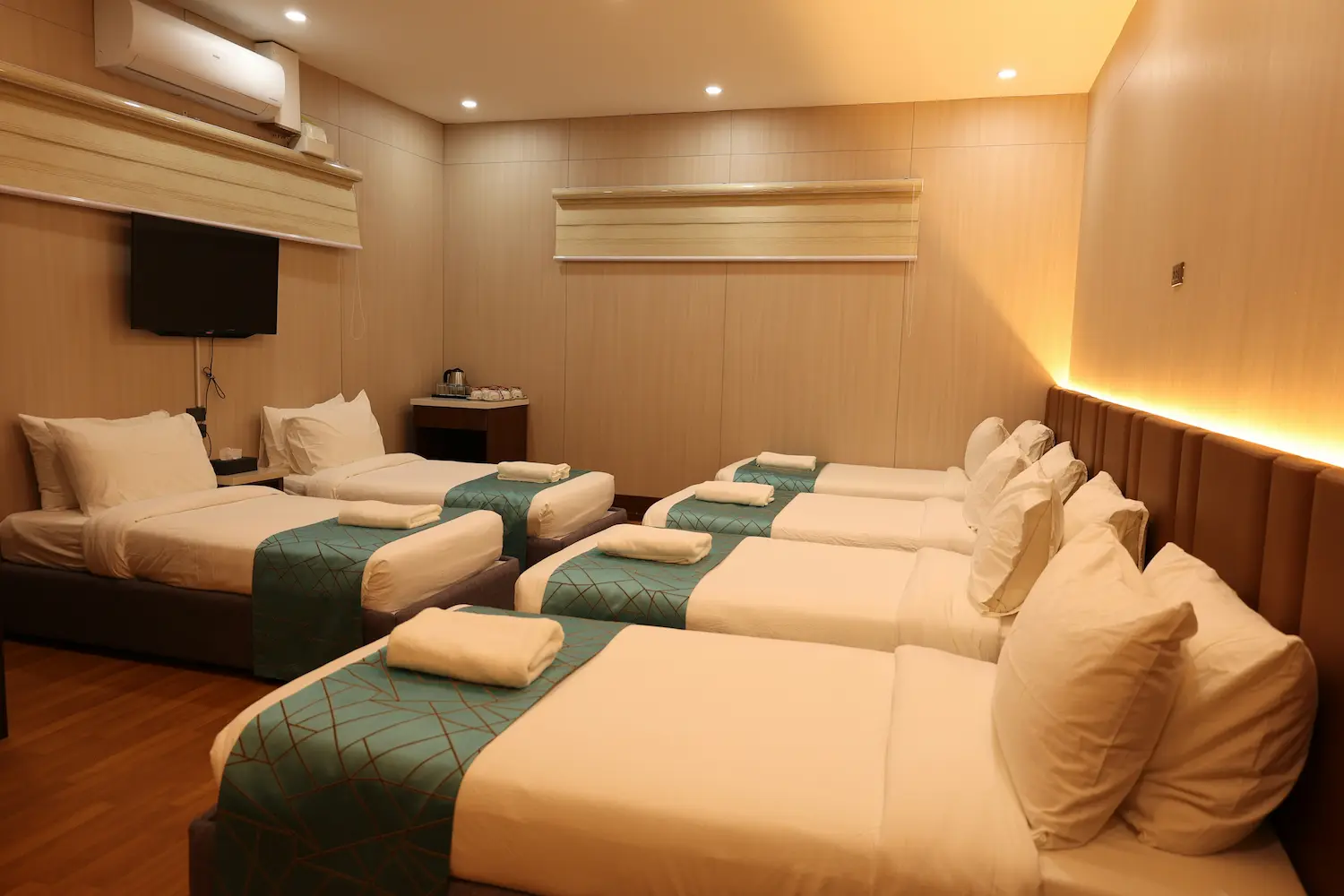
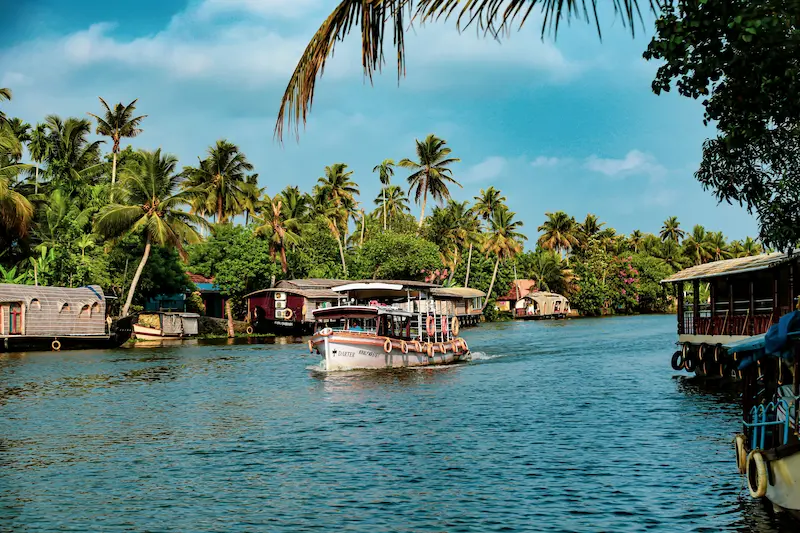
Accommodation in India ranges from simple hostels, lodges, and guesthouses to full-service hotels, boutique properties, resorts, and luxury retreats. Homestays and bed-and-breakfasts can be useful for travellers who prefer a quieter setting or want to stay in residential areas, while serviced apartments offer more space and practical facilities for families and longer visits. In destinations with a strong sense of place, you may also find heritage hotels in restored palaces or havelis, houseboats on Kerala’s backwaters, eco-lodges near nature areas, farm stays, and tented camps in desert or wildlife regions.
The best choice depends on your itinerary, budget, privacy needs, and the facilities that matter during the trip. Do not judge a property only by its category or photographs. Check its exact location, access, recent reviews, room details, meal arrangements, power supply, and cancellation terms before booking.
| Accommodation Type | Best Suited For | Main Advantage | Main Consideration | Key Features & Logistics |
|---|---|---|---|---|
| Hotels | Most travelers, families, business travelers, and short-stay tourists. | High convenience, standardized services, room amenities, and wide availability across different budget levels. | Quality, service standards, and pricing can vary significantly depending on the property and location. | 24/7 reception, housekeeping, room service, and locations ranging from central urban areas to airport and resort districts. |
| Hostels | Solo travelers, backpackers, students, and budget-conscious travelers. | Lower accommodation costs combined with a social atmosphere and opportunities to meet other travelers. | Limited privacy, shared bathrooms, potential noise, and fewer full-service amenities. | Dormitories, private rooms, common lounges, shared kitchens, co-working spaces, and organized activities at some properties. |
| Guesthouses | Budget travelers, independent explorers, and long-term visitors. | Often provides a relaxed, personal environment with locally run hospitality. | Facilities and service levels vary considerably, with fewer formal amenities at some properties. | Family-managed rooms, locally prepared meals at some properties, and local sightseeing advice. |
| Homestays | Culture seekers, slow travelers, and families interested in local experiences. | Greater opportunity for cultural interaction, home-style regional food, and personalized host guidance. | Accommodation standards, privacy levels, and house rules can differ between properties. | Staying with local families, traditional meals, and opportunities to experience village or neighborhood life. |
| Heritage Stays | Experience-focused travelers, history enthusiasts, and luxury travelers. | Historic character, distinctive architecture, traditional furnishings, and a strong sense of place. | Prices can be higher, while older buildings may have unusual layouts or modern limitations. | Restored havelis, fort stays, palace hotels, period architecture, and vintage interiors combined with modern comforts. |
| Resorts | Leisure travelers, honeymooners, families, and relaxation-focused trips. | Self-contained amenities such as pools, restaurants, spas, and recreational activities. | Many resorts are located away from city centers and major sightseeing areas. | Swimming pools, wellness facilities, restaurants, private or semi-private beaches at some properties, and curated recreational activities. |
| Luxury Camps | Premium travelers, glampers, and experiential adventure seekers. | Combines distinctive remote settings with elevated accommodation and hospitality. | Higher prices and seasonal availability can limit when and where these stays operate. | Luxury tents, private bathrooms, outdoor dining, scenic settings, and tailored activities. |
| Houseboats | Couples, nature lovers, and travelers seeking a distinctive water-based stay. | Offers a unique way to experience backwaters, lakes, and surrounding landscapes. | Restricted to specific waterways and routes, with limited mobility once docked. | Private bedrooms, onboard dining, crew-supported service, and scenic decks, depending on the property. |
Choose Accommodation According to Your Travel Style
The most suitable accommodation depends on how you travel, not just how much you want to spend. A property that works well for a solo backpacker may be inconvenient for a family, while a resort that suits a relaxing couple’s holiday may add unnecessary cost to an itinerary focused on sightseeing. Consider privacy, location, facilities, social atmosphere, and the amount of time you will actually spend at the property before booking.
Solo Travellers
Hostels are useful when you want a lower-cost place to stay and opportunities to meet other travellers. Guesthouses and centrally located budget hotels offer more privacy without necessarily requiring a large increase in cost. Check recent reviews for comments about security, staff availability, lockers, noise, and access to transport. In smaller towns, a well-reviewed guesthouse may be more practical than a hostel simply because there are fewer reliable options.
Couples
Couples can choose according to whether the accommodation is mainly a base for exploring or part of the experience itself. Boutique hotels, heritage properties, comfortable city hotels, and resorts may offer more privacy, better dining, or a quieter setting. Before booking, check whether the property is close to the places you want to visit and whether photographs accurately reflect the room category. A stylish property far from the main sights may create higher taxi costs and longer travel times.
Families
Families should prioritise convenience over appearance. Look for suitable room configurations, lifts where necessary, in-room or on-site dining, hot water, power backup, and easy access to transport. A family room is not always the best option if it is too small for luggage or lacks privacy. Confirm the sleeping arrangements, extra-bed policy, meal availability, and child-related charges directly with the property.
Budget Travellers
Hostels, guesthouses, lodges, and budget hotels can help control accommodation costs, but the cheapest room is not always the cheapest overall choice. A property with poor access may increase daily spending on autos, taxis, or meals outside. Check what is included, including air conditioning, Wi-Fi, breakfast, attached bathrooms, linen, and cancellation terms. Recent reviews are particularly useful for identifying maintenance, cleanliness, or service issues.
Luxury Travellers
Luxury hotels, resorts, heritage properties, and experiential stays offer a wider range of facilities and services, but the value depends on how you plan to use them. Compare the location, dining options, transfers, spa or recreation facilities, and included experiences rather than relying only on the property’s rating. In remote destinations, confirm road access, transfer arrangements, and seasonal operating conditions before paying a premium.
Long-Stay Travellers
For an extended stay, practical features become more important than a formal hotel setting. Consider larger rooms, a kitchenette, laundry access, workspace, storage, reliable internet, and grocery shops nearby. Ask about weekly or monthly rates, housekeeping frequency, electricity charges, and cancellation rules. A serviced apartment, apartment hotel, or homestay may offer better day-to-day convenience than a standard room.
Accommodation Options in India
India’s accommodation choices are closely connected to the kind of journey you are taking. In busy cities, you will find everything from economical rooms and backpacker beds to business hotels and international chains, with the neighbourhood often affecting your daily travel more than the room itself. Smaller towns may offer family-run guesthouses, simple lodges, and locally operated stays, while hill stations and rural areas commonly have cottages, farm stays, and homestays. Beach destinations tend to provide a wider mix of hotels, villas, and resorts, whereas wildlife areas may have forest lodges, safari camps, or nature retreats near park entrances. Historic regions also offer restored havelis, palaces, and heritage residences for travellers interested in architecture and local character.
For longer visits, serviced apartments and apartment hotels can provide extra space, cooking facilities, and laundry access. Before booking, compare the property’s location, transport connections, included services, room size, recent reviews, and cancellation conditions rather than relying on its label or photographs alone.
Hotels are the most widely available accommodation option in India, ranging from simple budget properties to full-service luxury hotels. They can be particularly convenient for travellers who want predictable facilities, easy access to transport, and a practical base for sightseeing.
- Luxury & 5-Star Hotels – offer extensive facilities, multiple dining options, and higher levels of service and comfort.
- Boutique & Mid-Range Hotels – provide comfortable rooms and additional character or facilities without the cost of luxury properties.
- Budget Hotels – focus on essential accommodation at lower prices, with facilities varying considerably between properties.
- Business Hotels – designed around convenience, connectivity, and practical facilities for short city stays.

Resorts are suited to travellers who want the accommodation itself to be part of the holiday. They are particularly common in beach, hill, nature, and wellness destinations, where guests may spend more time using the property’s facilities rather than travelling around continuously.
- Beach Resorts – designed around coastal stays, often with pools, restaurants, recreational facilities, and access to beaches.
- Hill Resorts – located in mountain and hill destinations, often offering scenic views and leisure facilities.
- Nature Resorts – provide a quieter setting near forests, plantations, lakes, or other natural areas.
- Wellness & Luxury Resorts – focus on relaxation, spa facilities, dining, and premium experiences.

Heritage stays and palaces allow travellers to experience historic architecture and properties that have been adapted for accommodation. They can be particularly appealing when the character and history of the property are an important part of the trip.
- Palace Hotels – historic royal residences converted into distinctive heritage accommodation.
- Fort Stays – properties within or associated with historic forts, often featuring distinctive architecture and views.
- Haveli Stays – restored traditional mansions with courtyards, decorative details, and regional character.
- Plantation Bungalows – historic or traditional estate properties associated with tea, coffee, or spice-growing regions.

Homestays and guesthouses can provide a more personal alternative to conventional hotels, particularly for travellers who prefer smaller properties or a residential setting. Facilities and service levels can vary, so recent reviews and property details are important when comparing options.
- Traditional Homestays – stays with local hosts that may provide greater interaction with local life and customs.
- Family-Run Guesthouses – smaller properties that can offer a relaxed atmosphere and practical accommodation.
- Village & Farm Stays – rural accommodation that can provide access to agricultural settings and local surroundings.
- Estate Homestays – stays on or near tea, coffee, and spice plantations, particularly in parts of South India.

Hostels are particularly useful for solo and budget travellers who want lower-cost accommodation and opportunities to meet other travellers. Many hostels offer both shared dormitories and private rooms, although facilities, atmosphere, security arrangements, and standards can differ between properties.
- Backpacker Hostels – affordable accommodation with shared social spaces and dormitory options.
- Dormitories – shared rooms that generally provide the lowest-cost accommodation within a hostel.
- Private Hostel Rooms – provide greater privacy while retaining access to shared hostel facilities.
- Social & Co-Working Hostels – combine accommodation with common areas designed for interaction, work, or longer stays.
Unique and experiential stays make the accommodation itself part of the travel experience. These properties are usually destination-specific and may involve a distinctive setting, landscape, activity, or style of accommodation that is not available in conventional hotels.
- Kerala Houseboats – distinctive floating accommodation on the backwaters, with different levels of comfort and service.
- Wildlife Lodges – properties near national parks and wildlife areas, often convenient for early safari departures.
- Luxury Desert Camps – tented accommodation in desert regions, often combining distinctive surroundings with higher levels of comfort.
- Treehouses & Nature Stays – distinctive accommodation designed around forest, plantation, or other natural settings.
Choose the Right Location
The location of your accommodation can have as much impact on your trip as the property itself. A cheaper hotel may seem attractive until you factor in daily taxi or auto-rickshaw fares, longer journeys, traffic, and the time spent getting to the places you want to visit. On the other hand, paying more for a central or well-connected property may be worthwhile if it reduces daily transportation and gives you more time for sightseeing.
Consider the following trade-offs when choosing where to stay:
City centre: Convenient for sightseeing, restaurants, shopping, and public transport, but properties may cost more and the area can be busy or noisy.
Tourist areas: Useful when you want attractions, restaurants, and activities close by, although these areas can be more crowded and expensive.
Railway or metro areas: Practical for travellers who expect to use public transport frequently, particularly on short city visits.
Airport areas: Convenient for early flights, late arrivals, or short overnight stays, but usually less suitable when your main purpose is sightseeing.
Beach areas: Staying close to the beach can provide easy access and a better leisure experience, while properties farther inland may offer lower rates but require additional local transport.
Quieter neighbourhoods: Can provide a more relaxed stay and sometimes better value, but check transport connections before booking.
Outskirts: Accommodation may offer more space or lower prices, but longer travel times can reduce the practical savings.
Near national parks: Staying close to an entrance or safari meeting point can be valuable when you have early activities or limited time, even if the property costs more.
Mountain-town centres vs remote properties: A town-centre stay usually provides easier access to restaurants, shops, and transport, while a remote property may offer better views, peace, and a more immersive experience but require additional transfers.
Choose the location based on what you plan to do, not simply where the room is cheapest. When comparing properties, consider the total cost and convenience of the stay: room price, daily transportation, travel time, accessibility, nearby services, and the activities you intend to experience. A slightly more expensive property in a convenient location can sometimes provide better overall value than a cheaper property that requires long or expensive journeys every day.
Consider the Trade-Off Between Location, Price and Comfort
Choosing accommodation in India often means balancing three competing priorities: where you stay, what you pay, and how comfortable the property feels. A hotel in the centre of a city may cost more, but it can reduce daily spending on taxis and shorten travel time to major attractions. A cheaper room on the outskirts may offer more space, yet the savings can disappear through repeated transfers, traffic delays, and additional transport costs.
Comfort also needs to match the purpose of your trip. For a short sightseeing break, a clean, well-located room may be more useful than extensive facilities. On a slower holiday or longer stay, reliable Wi-Fi, air conditioning, quiet surroundings, breakfast, laundry, and power backup may justify a higher rate. Before booking, consider the complete daily cost, including accommodation, transport to the places on your itinerary, and any important services you would otherwise need to pay for separately. In many cases, paying slightly more for a convenient location provides better overall value than choosing the lowest advertised room price.
My Approach to Travelling and Staying in India
Living in India, I have found that planning transport and accommodation together makes a trip much easier. A room may appear affordable, but if it is far from the railway station, airport, metro line, or main attractions, the daily cost and time spent travelling can quickly change the calculation. I therefore begin with the route and the purpose of each stop before choosing a property.
For long distances, I compare trains, flights, and buses according to the total journey time rather than the ticket price alone. An overnight train can be practical when it connects two cities and avoids paying for a room, while a flight may be more suitable when the itinerary is short or the destinations are widely separated. For smaller towns, hill areas, beaches, and wildlife destinations, I check the final road transfer before confirming anything. A direct connection is not always available, and the last part of the journey can require a taxi, shared vehicle, or local bus.
I also choose accommodation according to how I expect to spend the day. In a city with several planned visits, I prefer a clean and well-connected base over a more attractive property in an inconvenient location. For slower trips, I am more willing to pay for space, views, good dining, or facilities that make staying at the property worthwhile. On longer journeys, laundry access, reliable internet, breakfast, and power backup become practical priorities rather than optional extras.
Before booking, I read recent reviews, confirm the exact location, check what the rate includes, and review the cancellation policy. This approach helps me balance the budget and pace of a trip without treating every destination in the same way.