
Planning a trip to India can feel overwhelming, especially when you are deciding where to go, when to visit, how much to spend, and how to get around. India brings together diverse regions, climates, cultures, cuisines, landscapes, and travel experiences, so there is no single approach that works for every traveller. A practical plan helps you make informed choices while keeping enough flexibility to enjoy the journey rather than following a rigid schedule.
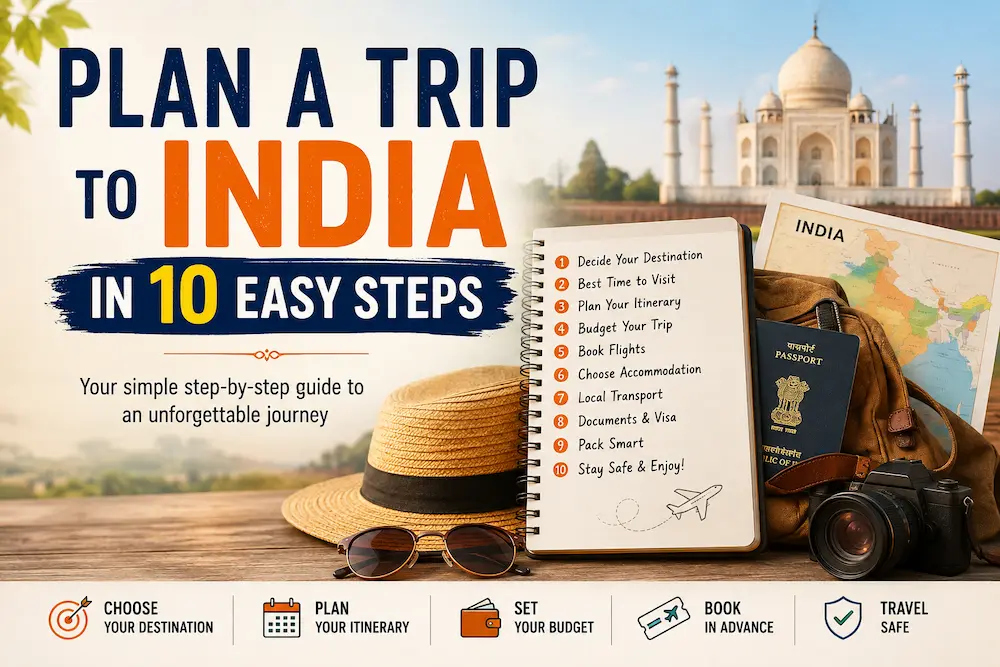
This guide explains how to plan a trip to India in 10 easy steps, taking you from the initial decisions to the final preparations before departure. You will learn how to choose the best time to visit, select destinations, decide how many days you need, set a realistic budget, build an itinerary, arrange transport and accommodation, check essential travel requirements, and prepare for local conditions. The recommendations are designed for first-time visitors as well as families, couples, solo travellers, and budget-conscious explorers.
Step 1 — Decide the Best Time to Visit India
There is no single best time to visit India. The right travel period depends on where you want to go and what you want to do. India spans the Himalayas, northern plains, western desert, tropical coasts, central forests, and the Northeast, each with different weather patterns. Choosing your travel dates should therefore come after identifying the regions and experiences that matter most to you.
Winter: October to March – Winter is generally the most comfortable period for travel across much of India, particularly North, West, and Central India. Days are usually pleasant for sightseeing, although mornings and evenings can be cold in northern areas. December and January may bring fog to the northern plains, sometimes affecting flights, trains, and visibility. South India remains warmer, with many areas experiencing relatively comfortable conditions. Christmas, New Year, and school holidays can bring higher demand and prices.
Summer: April to June – Temperatures rise sharply across the northern plains, Rajasthan, Central India, and parts of the Deccan, making daytime sightseeing and long road journeys uncomfortable. If travelling during this period, plan outdoor activities for early morning or late afternoon. Mountain and higher-altitude regions generally offer cooler conditions, although weather varies considerably by location and elevation.
Monsoon: June to September: The southwest monsoon brings substantial rainfall to much of India, beginning in the southwest and progressing across the country. Heavy rain can affect roads, trains, flights, trekking, and outdoor activities, while some areas may experience flooding or seasonal closures. However, monsoon also brings lush landscapes, greener countryside, and fewer crowds in many places. If travelling during this period, allow extra time between connections and check local weather and access conditions before finalising your plans.
| Period | General Conditions | Planning Considerations | Best For |
|---|---|---|---|
| October–November | Post-monsoon transition; pleasant autumn temperatures, clear skies, and lush green landscapes following the rains. | Excellent overall timing; check regional festival calendars (Diwali, Dussehra) as peak travel dates bring higher prices and crowded transit. | Rajasthan, Golden Triangle (Delhi-Agra-Jaipur), Varanasi, and high-altitude trekking before winter passes close. |
| December–January | Cool to crisp across northern regions; comfortably warm and sunny across central, southern, and coastal areas. | North India experiences dense morning fog impacting flights and train schedules. High peak-season pricing around holidays. | Beach holidays in Goa and Kerala, wildlife safaris in Madhya Pradesh, exploring South Indian temples, and skiing in Gulmarg. |
| February–March | Spring transition featuring warm, sunlit days and cool evenings across nearly all regions before the harsh summer sets in. | Excellent travel window with lighter crowds than peak winter; Holi celebrations in March can temporarily disrupt local transport. | Cultural sightseeing across North and South India, wildlife viewing as animals congregate near waterholes, and outdoor excursions. |
| April–June | Extreme summer heat dominates the plains, with temperatures routinely exceeding 40°C (104°F) in central and northern India. | Outdoor sightseeing during the day becomes grueling; pack light cottons, prioritize air-conditioned transit, and plan mid-day breaks. | Escape to Himalayan hill stations (Himachal Pradesh, Uttarakhand, Ladakh), wildlife viewing, and high-mountain pass trekking. |
| June–September | Southwest monsoon brings heavy, persistent rainfall, high humidity, and lush vegetation to most of the country. | Severe rain can trigger landslides in mountains and urban flooding in lowlands. Transport delays and ferry suspensions are common. | Ladakh and Zanskar (rain-shadow zones), Kerala (for traditional Ayurvedic treatments), and budget travelers seeking low-season rates. |
The key is to match your dates to your route rather than looking for one “best” month for all of India. If festivals such as Diwali, Holi, Durga Puja, or Pongal are important to you, check their dates before booking because major celebrations can affect accommodation availability, transport demand, and local traffic.
Step 2 — Decide What You Want to Experience in India
India offers an enormous variety of travel experiences, so it helps to decide what you want from your trip before choosing specific destinations. You might be interested in history and architecture, local culture and festivals, food, mountains, beaches, wildlife, spirituality, adventure, or simply having a relaxed holiday. Identifying your main interests gives your itinerary a clear direction and makes it easier to decide which parts of India are worth including.
You do not need to choose just one travel style. Combining two or three priorities can create a more balanced trip, but avoid trying to cover everything in a short holiday. For example, a first-time traveller interested in history, culture, and food may prefer a destination-rich cultural itinerary, while someone looking for nature, wildlife, and adventure may benefit from spending more time in fewer places.
| Travel Interest | What You Can Experience | Planning Approach | Best For |
|---|---|---|---|
| History & Heritage | Elaborate Mughal and Rajput forts, sprawling ancient ruins, UNESCO World Heritage monuments, and royal palaces that showcase centuries of architectural style. | Allocate multi-day stays in historic hubs, pre-book entry permits for high-traffic sites, and hire licensed local guides to fully appreciate the context. | History enthusiasts, first-time visitors, photography buffs, and travelers interested in architecture and imperial legacies. |
| Culture & Festivals | Vibrant regional traditions, classical music and dance performances, traditional craft workshops, and large-scale cultural events like Diwali, Holi, or the Pushkar Fair. | Monitor lunar calendar dates for festivals, reserve accommodations months in advance for major events, and research local etiquette for sacred spaces. | Cultural immersion seekers, festival-goers, artisans, and photographers looking for vivid human stories and street photography. |
| Food & Culinary | Distinct regional thalis, historic street food lanes, bustling spice markets, estate tea tastings, and hands-on cooking masterclasses with local families. | Build flexible meal times into your itinerary, join vetted culinary walking tours, and keep travel days light to sample street food safely. | Food lovers, curious eaters, home cooks, and travelers who want to understand a culture through its local flavors and markets. |
| Mountains & Nature | High-altitude Alpine passes, serene pine forests, snow-capped Himalayan peaks, terraced tea plantations, and tranquil mountain valleys. | Account for gradual altitude acclimatization, monitor seasonal pass closures, and budget extra transit time due to winding mountain roads. | Trekkers, nature photographers, summer heat-escapers, and travelers seeking cool climates and panoramic landscapes. |
| Beaches & Relaxation | Palm-fringed coastal stretches, heritage beach resorts, water sports, serene backwater cruises, and slow-paced coastal village life. | Base yourself in one or two beach regions rather than moving constantly, and check seasonal sea conditions and lifeguard availability before swimming. | Couples, families, slow travelers, water sports enthusiasts, and anyone looking to unwind at the end of a busy itinerary. |
| Wildlife & Safaris | Encounters with Bengal tigers, one-horned rhinos, Asian elephants, and diverse bird species across national parks and biosphere reserves. | Secure park permits and jeep safari slots months ahead (as quotas are strictly capped), and plan trips around optimal dry-season months when animals gather at waterholes. | Wildlife photographers, nature lovers, conservation enthusiasts, and adventure seekers wanting an authentic jungle experience. |
| Spiritual & Wellness | Sacred river ghats, ancient temple complexes, holistic Ayurvedic retreats, quiet meditation ashrams, and immersive yoga immersion programs. | Dress conservatively, respect site-specific photography bans, and block out multi-day stays for wellness programs to receive full therapeutic benefits. | Seekers of inner peace, wellness practitioners, yoga enthusiasts, and travelers interested in living religious traditions. |
| Adventure & Outdoor | River rafting on glacial rivers, high-altitude trekking, scuba diving off island reefs, skiing, and off-road motorcycling expeditions. | Verify equipment safety standards, purchase comprehensive travel insurance covering high-altitude/extreme sports, and pack specialized gear. | Thrill-seekers, experienced hikers, action photographers, and travelers looking to test their physical limits outdoors. |
For a first trip to India, two or three main interests are usually enough to shape your itinerary. Your priorities can then guide the next decision: choosing the regions and destinations that offer the experiences you are looking for.
Step 3 — Choose Where to Go in India
Once you have decided when to travel and what you want to experience, the next step is choosing the regions and destinations that fit your plans. India is too large to cover in a single trip, so trying to include every famous destination can result in long journeys and too little time at each place. Instead, choose destinations based on your interests, travel dates, available time, and how much travelling you are comfortable with.
India can be broadly divided into five travel regions for planning purposes. Each offers a different mix of landscapes, culture, history, food, and activities.
| Region | Particularly Suitable For | Key Highlights & Travel Logistics | Examples of Experiences | Best For |
|---|---|---|---|---|
| North India | Heritage, culture, spirituality, mountain escapes, and imperial history. | Well-connected by rail and road; October–March is generally suitable for the plains, while April–June is better for many mountain destinations. | Explore Mughal architecture including the Taj Mahal, visit Mughal and Rajput forts, attend the evening Ganga Aarti in Varanasi, visit the Golden Temple in Amritsar, or explore Himalayan landscapes in Ladakh and Himachal Pradesh. | First-time visitors, history buffs, spiritual seekers, and mountain trekkers. |
| South India | Dravidian culture, coastal relaxation, culinary experiences, wellness, and backwaters. | Generally warm throughout the year, with a slower coastal pace; October–March is generally a comfortable period for many destinations. | Cruise Kerala’s backwaters on a houseboat, admire Dravidian temples in Tamil Nadu, explore coffee plantations in Coorg, and experience traditional wellness programs. | Repeat visitors, wellness travelers, culinary enthusiasts, and slow-paced vacationers. |
| West India | Desert landscapes, royal heritage, vibrant cities, and beach escapes. | Climate varies from the arid Thar Desert to tropical coastlines; major cities and tourist areas have extensive road, rail, and air connections. | Camp among the dunes of Jaisalmer, explore Goa’s Portuguese heritage and beaches, experience Mumbai’s food scene, or visit Gir National Park. | Desert explorers, beach lovers, nightlife seekers, and urban culture enthusiasts. |
| East & Central India | Wildlife, tribal heritage, ancient architecture, forests, and river landscapes. | Home to major tiger reserves and historic sites; November–April is generally favorable for wildlife-focused travel, although conditions vary by park. | Take jeep safaris in Kanha or Bandhavgarh, visit Khajuraho’s temples, explore Kolkata’s colonial heritage, and discover regional arts and crafts. | Wildlife photographers, off-the-beaten-path travelers, and culture-focused explorers. |
| Northeast India | Natural beauty, indigenous cultures, adventure, and less-visited destinations. | Some areas require permits or special entry arrangements, while mountainous terrain can make journeys longer and more weather-dependent. | See one-horned rhinos in Kaziranga, walk across Meghalaya’s living root bridges, explore Assam’s tea gardens, and discover Arunachal Pradesh’s mountain landscapes and monasteries. | Adventure travelers, nature enthusiasts, offbeat explorers, and eco-conscious travelers. |
You don’t necessarily need to stay within one region. If you have enough time and convenient transport connections, combining two nearby areas can create a more varied itinerary. However, avoid choosing destinations simply because they are popular. A famous place may not be worth adding if reaching it requires a long detour or leaves too little time for the rest of your trip.
For shorter holidays, concentrate on one region or a compact route. With two or three weeks, you can consider combining regions, provided you allow enough time for transportation between them. Your travel season should also influence the final choice, as weather conditions can differ considerably between destinations during the same month.
Step 4 — Decide How Many Days You Need in India
The number of days you have available should shape your itinerary, not the other way around. India is a large country, and travel between destinations can take longer than expected. Trying to cover too many cities in a short holiday often means spending more time packing, checking in, and travelling than actually experiencing the places you came to see.
As a general planning rule, focus on fewer destinations when you have less time. A week can work well for one compact route, while two or three weeks give you more flexibility to combine destinations or explore a larger region. Your arrival and departure cities also matter because returning to your starting point can add unnecessary travel time.
| Trip Length | What You Can Realistically Do | Planning Considerations & Logistics | Suitable For | Best For |
|---|---|---|---|---|
| 3–5 Days | Explore a single major metropolis such as Mumbai or Delhi, or a compact hub like Goa, Jaipur, or Varanasi. Focus on 2–3 key sights daily with time for dining and local markets. | Use direct flights and high-speed express trains (Vande Bharat/Shatabdi) to minimize transit. Avoid multi-stop itineraries to prevent burnout. | Weekend travelers, business travelers extending a stay, and repeat visitors targeting a single city. | City breaks & single hubs: Delhi architectural tour, Goa beach getaway, or Varanasi cultural immersion. |
| 7 Days | Complete a classic tourist circuit like the Golden Triangle (Delhi–Agra–Jaipur) or a focused single-state itinerary such as Kerala’s backwaters and hill stations. | Daily travel times can average 3–5 hours by road or rail. Pre-booking private transfers or high-speed rail tickets can help maximize sightseeing time. | First-time visitors with limited vacation time wanting to see iconic landmarks without overstretching. | Classic compact circuits: Golden Triangle (Taj Mahal & forts), Kerala (Kochi–Munnar–Alleppey), or East India (Kolkata–Darjeeling). |
| 10–14 Days | Explore one region in depth, such as Rajasthan’s fort towns, South India’s temple circuits, or Ladakh’s high-altitude valleys, at a balanced and comfortable pace. | Allows for a mix of 2-night stays in primary cities and 1-night stops in rural or scenic areas. Transit days remain manageable while leaving time for leisure. | First-timers seeking a well-rounded India experience, families, and travelers looking for a mix of culture, history, and relaxation. | Regional deep dives: Grand Rajasthan (Jaipur–Jodhpur–Udaipur), South India Heritage, or Himalayan explorations. |
| 2–3 Weeks | Combine two contrasting regions, such as North India’s palaces with South India’s backwaters, or complete a broader multi-state circuit without excessive rushing. | Incorporate 1–2 domestic flights to connect distant regions. Build in buffer days every 5–6 days for rest, laundry, or unexpected transport delays. | Long-haul international travelers, sabbatical travelers, and culture enthusiasts wanting a diverse cross-section of India. | Multi-region journeys: North & South highlights or Wildlife & Culture combining Madhya Pradesh safaris with Varanasi. |
| 3–4+ Weeks | Travel at a relaxed pace across multiple geographic zones, from the high Himalayas to southern coastlines, while including off-the-beaten-path regions. | Ideal for longer overland journeys, sleeper trains, and scenic drives. Allows spontaneous itinerary changes, longer stays, and immersive local workshops. | Backpackers, remote workers, retirees, slow-travel advocates, and deep-immersion seekers. | Pan-India & remote expeditions: Coast-to-coast journeys, Northeast India explorations, or extended spiritual retreats. |
When planning your duration, count travel days separately from sightseeing time. A six-hour train journey or a domestic flight with airport transfers can take up a substantial part of a day. Also allow some flexibility for delays, weather, fatigue, and unexpected changes.
Step 5 — Set a Realistic Budget for Your India Trip
A realistic India travel budget should reflect more than the price of hotels and flights. Transport between destinations, food, entrance fees, local guides, activities, travel insurance, permits, and occasional unexpected costs can significantly affect the final amount. Prices also vary by region, season, travel style, and booking habits. A backpacker travelling by train and staying in guesthouses will have a very different budget from a family using private transfers and premium hotels. Start by deciding how you want to travel, then divide your estimated spending into fixed and flexible costs. Keep a separate allowance for delays, last-minute changes, medical needs, and small purchases that are easy to overlook. The aim is not to minimise every expense, but to create a budget that supports your priorities without requiring constant compromises. A clear financial plan also helps you choose a suitable route, travel season, accommodation level, and number of destinations.
| Travel Style | Estimated Daily Budget | Accommodation | Transport | Food & Dining | Suitable For | Best For |
|---|---|---|---|---|---|---|
| Budget | $25–$40 / day (₹2,000–₹3,500) | Social backpacker hostels (Zostel, Hostelworld), family-run guesthouses, and simple private rooms with basic amenities. | Overnight sleeper trains (3AC class), intercity AC sleeper buses, public metros, and shared auto-rickshaws. | Street food stalls, local dhabas, tea stalls (chai), and casual neighborhood joints. | Backpackers, solo travelers, students, and budget-conscious long-term travelers. | Extended backpacking trips, immersive cultural street tours, and low-cost regional travel. |
| Mid-Range | $70–$120 / day (₹6,000–₹10,000) | 3–4 star boutique hotels, restored heritage havelis, clean business hotels, and atmospheric homestays. | Domestic budget airline flights, high-speed trains (Vande Bharat Express / Shatabdi), metro rides, and occasional private taxis. | A mix of popular local restaurants, boutique cafes, hotel dining, and guided street food walking tours. | First-time visitors, families, couples, and travelers seeking comfort without high luxury. | Balanced 1- to 2-week itineraries, Golden Triangle tours, and comfortable multi-city travel. |
| Premium / Luxury | $200–$500+ / day (₹16,000–₹40,000+) | 5-star luxury chains (Taj, Oberoi, Leela), converted royal palaces, high-end beach resorts, and luxury houseboats. | Chauffeur-driven private air-conditioned cars, business-class domestic flights, and luxury tourist trains such as Palace on Wheels. | Fine dining restaurants, royal cuisine tasting menus, private chef experiences, and upscale hotel dining. | Honeymooners, luxury seekers, busy professionals, and travelers prioritizing privacy and top-tier service. | VIP access tours, royal heritage stays in Rajasthan, high-end Ayurvedic retreats, and luxury wellness escapes. |
All cost estimates and budgets are approximate averages and will vary based on seasonal peak pricing, inflation, exchange rate fluctuations, booking timing, and your specific travel choices.
Step 6 — Build a Realistic India Itinerary
A realistic India itinerary should bring together the destinations, travel dates, available time, and budget you have already considered. It should also balance the places you want to see with the time and effort required to reach them. Distances that appear manageable on a map can involve slow roads, busy stations, airport transfers, delays, and several hours of travel. Begin with a clear route rather than adding destinations individually, and group places that are connected by practical transport links.
Allow enough time at each stop to explore beyond the main attractions, eat locally, rest, and adjust when plans change. A well-paced itinerary often gives major destinations at least two or three nights, while allowing lighter schedules after long journeys and a buffer before important flights or activities. Avoid treating every day as a sightseeing day; arrival, departure, and transfer days rarely provide as much usable time as expected. Your travel style should also shape the pace. Families may prefer fewer hotel changes, while experienced travellers may be comfortable with overnight trains or longer road journeys.
| Itinerary Decision | Practical Approach | Real-World Application | Why It Matters | Best For |
|---|---|---|---|---|
| Start with Your Arrival City | Build a logical linear or circular route directly around your entry and exit hubs, such as airports or major rail terminals. | Book an open-jaw flight, such as flying into Delhi and out of Mumbai, to cover ground continuously without returning to the starting point. | Eliminates unnecessary backtracking, saving significant travel time and potentially reducing transport costs. | Multi-city circuits, international travelers, and tight itineraries. |
| Group Nearby Destinations | Sequence stops based on direct road, high-speed rail, or regional flight connections. | Link Jaipur, Agra, and Delhi via expressways and trains rather than jumping across the country between isolated destinations. | Maximizes actual sightseeing time while reducing transit stress and unnecessary travel expenses. | First-time visitors, regional road trips, and short-duration vacations. |
| Limit Hotel Changes | Adopt a “hub-and-spoke” strategy—stay 2–3 nights in a central base and take day trips to nearby attractions. | Base yourself in Kochi to explore Fort Kochi, nearby backwaters, and surrounding attractions instead of changing hotels every night. | Reduces packing and unpacking, prevents travel fatigue, and allows deeper local exploration. | Families, slow travelers, and mid-range or luxury itineraries. |
| Separate Travel from Sightseeing | Treat major travel legs of four hours or more as dedicated transit periods rather than combining them with a full sightseeing schedule. | Schedule long train journeys or flights during late afternoons or evenings, keeping mornings available for relaxed local exploration. | Protects your schedule when delays occur and reduces the risk of missing major monument tickets or pre-booked tours. | Long-distance routes, overland train trips, and dense regional itineraries. |
| Allow Buffer Time | Insert 2–4 hours of unscheduled time before key departures, pre-booked tours, or major events. | Keep the final afternoon before an international flight completely clear instead of booking a last-minute tour. | Provides flexibility for traffic jams, weather disruptions, transport delays, and other unexpected changes. | Tight connections, monsoon-season travel, and important events. |
| Balance the Pace | Alternate high-intensity sightseeing days with relaxed, low-activity periods. | Follow a full day exploring crowded forts with a quiet morning at a local café or a leisurely boat ride. | Keeps energy levels consistent throughout the journey and helps prevent sightseeing burnout. | Long itineraries of 10+ days, multi-generational groups, and summer trips. |
| Plan Around Transport Schedules | Verify exact transit durations, departure frequencies, and seasonal delays before committing to a daily route. | Check Vande Bharat train schedules or local flight routes early, while allowing for possible fog or monsoon-related disruptions. | Prevents unrealistic itineraries that look manageable on paper but become difficult in real-world conditions. | Independent travelers, multi-modal routes, and off-the-beaten-path destinations. |
The strongest itinerary is not the one with the most destinations, but the one you can follow comfortably while still having time to experience India.
Step 7 — Check Visa, Passport and Entry Requirements
Before booking your flights, confirm the visa and entry requirements that apply to your nationality and travel plans. India’s requirements can vary according to your passport, purpose of travel, intended length of stay, and visa category. Check that your passport meets the required validity conditions and that your travel documents are in order before submitting an application.
If you apply for an e-Visa, carefully review its validity period, permitted stay, eligible activities, and designated entry requirements. Keep copies of your passport, visa approval, accommodation bookings, return or onward tickets, travel insurance, and emergency contacts in both digital and printed form where practical. Make sure the names and other personal details on your bookings match your passport.
Most importantly, do not rely on an old blog post or third-party booking website for current immigration rules. Use official Indian government visa and immigration sources to verify the latest requirements, and check again shortly before departure because procedures can change. Every traveller, including children, should have the documents required for their individual circumstances.
| Requirement | Specific Verification Criteria | Practical Action & Planning Approach | Real-World Impact & Why It Matters | Best For / Key Scenarios |
|---|---|---|---|---|
| Passport |
|
Check expiration dates at least 6 months in advance. Apply for passport renewal promptly if validity is insufficient or blank pages are running low. | Passport problems can result in denied boarding, immigration delays, or disruption to your trip. | All international travelers, e-Visa applicants, and travelers requiring long-term visas. |
| Regular / Paper Visa |
|
Apply through the appropriate Indian Embassy, Consulate, or authorized visa application center well ahead of departure. | Entering India with an incorrect visa category or violating its conditions can lead to immigration problems, penalties, or removal from the country. | Travelers requiring longer stays, specific visa categories, or travelers who are not eligible for an e-Visa. |
| e-Visa |
|
Carry a printed copy of the Electronic Travel Authorization and retain a digital copy. If you receive a new passport after applying, carefully check the applicable requirements before travel. | Incorrect passport details or attempting to enter through an unsupported entry point can cause significant delays or denial of entry. | Short-term leisure, business meetings, medical visits, and eligible conference travelers. |
| Personal Details Consistency |
|
Double-check first, middle, and last name ordering during bookings. Use the spelling exactly as shown on your passport. | Inconsistent information can cause booking, check-in, boarding, or immigration delays. | Flight bookings, airline check-in, hotel reservations, visa applications, and domestic travel. |
| Supporting Travel Documents |
|
Maintain digital and offline copies of important vouchers, travel insurance documents, accommodation details, and financial records. Carry printed copies where practical. | Supporting documents may be requested during check-in or immigration procedures and can help demonstrate the purpose and arrangements of your trip. | First-time visitors, longer stays, and travelers who may need additional documentation during entry. |
| Children & Minor Companions |
|
Verify children’s passport and visa requirements early and carry documents establishing parental relationships when applicable. | Missing documentation for minors can create additional checks and significant delays at airports or borders. | Family vacations, school trips, and travel involving children with only one parent or guardian. |
| Latest Rules & Regulatory Compliance |
|
Re-check official entry and visa requirements shortly before departure, especially if your trip involves a long-term visa or restricted/protected region. | Visa violations, overstays, or failure to comply with applicable regulations can result in fines, departure complications, or future immigration restrictions. | Long-term travelers, students, expatriates, and visitors entering restricted or protected regions. |
Requirements can change, so verify the latest information through official Indian government visa and immigration sources before applying and again before departure.
Step 8 — Plan Your Transport and Accommodation
Once your dates, destinations, duration, budget, itinerary, and entry requirements are clear, plan how you will move between places and where you will stay. Transportation and accommodation can have a significant effect on both your budget and the pace of your trip, so consider them together rather than treating them as separate bookings.
India offers several ways to travel between destinations, including trains, domestic flights, buses, taxis, private cars, and metro systems in major cities. Choose based on distance, travel time, comfort, reliability, and budget. For longer journeys, a flight may save considerable time, while trains can be a practical option for many popular routes. Within cities, local transport options vary, so check the most suitable option before arrival.
Accommodation should match your itinerary and travel style rather than simply focusing on the lowest price. Consider location, transport access, reviews, safety, cancellation policies, and the time required to reach major attractions. Families may prefer convenient hotels with fewer changes, while solo or budget travellers may value hostels and centrally located guesthouses.
| Planning Factor | Specific Considerations | Practical Action & Planning Approach | Real-World Impact & Why It Matters | Best For / Key Scenarios |
|---|---|---|---|---|
| Long-Distance Travel |
|
Compare door-to-door transit time—including airport security, transfers, and station access—rather than looking only at flight duration. Book preferred premium train classes early when necessary. | Choosing the wrong long-distance transport option can consume an entire sightseeing day or create significant travel fatigue. | Inter-state travel, Golden Triangle routes, and long-distance multi-region circuits. |
| Short-Distance & Local Transit |
|
Use metro systems in major cities where practical to bypass road traffic. App-based cabs can provide point-to-point convenience, while auto-rickshaws can be useful for shorter local journeys. | Traveling through dense city centers during peak hours can add substantial delays to individual sightseeing trips. | Daily city sightseeing, market visits, and airport or railway-station transfers. |
| Accommodation Location |
|
Choose a well-located hotel in a reasonably walkable and connected neighborhood rather than automatically selecting the cheapest remote property. | Staying far from central attractions can create long and expensive daily commutes, reducing the time available for sightseeing. | Short city breaks, tight itineraries, and travelers without private drivers. |
| Travel Style & Priorities |
|
Align transport and accommodation choices with your comfort level, preferred pace, and social preferences rather than copying a generic itinerary. | A mismatch between travel style and logistics can create unnecessary discomfort, stress, and lower overall trip satisfaction. | Solo travelers, families with young children, older travelers, and luxury travelers. |
| Booking Timing & Seasonality |
|
Secure core flights, trains, and popular accommodation well in advance for major festivals and high-demand travel periods. | Last-minute bookings during busy periods can result in sold-out trains, higher airfares, and fewer accommodation choices. | Festival travel, high-season beach trips, and wildlife safari trips. |
| Itinerary Flexibility |
|
Where practical, reserve refundable accommodation and choose flexible transport options for climate-sensitive parts of the itinerary. | Rigid, non-refundable bookings can result in financial losses when weather or transport disruptions affect your route. | Monsoon travel, high-altitude Himalayan routes, and extended slow travel. |
Avoid booking every part of your trip before confirming that the transport connections actually work together. A cheap hotel can become expensive in practice if it requires lengthy daily transfers, while a slightly more expensive property near a major transport hub may save both time and money.
Step 9 — Prepare for Money, Connectivity, Safety and Everyday Travel
Once your main bookings are in place, prepare for the practical details that can make your trip easier. Having a plan for money, mobile connectivity, communication, food, local transport, and personal safety can reduce unnecessary stress, particularly if this is your first visit to India. You do not need to plan every small detail, but knowing how you will handle the basics gives you more confidence once you arrive.
India is increasingly convenient for digital payments, but it is still sensible to carry some cash for smaller purchases and situations where cards or digital payments may not be accepted. Arrange a suitable SIM or eSIM if your phone and plan support it, and keep important travel information available offline. For everyday safety, use reputable transport options, keep valuables secure, be cautious with unsolicited assistance, and understand common tourist scams before you arrive. Food and water habits also deserve some attention, particularly during the first few days while you adjust to local conditions.
| Travel Preparation Area | Key Items & Specific Actions | Practical Execution & Setup | Why It Matters & Real-World Impact | Best For / Key Scenarios |
|---|---|---|---|---|
| Money & Payments |
|
Notify your bank about international travel where required. Use reputable bank ATMs and avoid keeping all cash and cards together in one place. | Smaller merchants, local transport, and some rural businesses may have limited card acceptance. A backup payment method reduces the impact of a declined or blocked card. | Markets, street dining, rural transfers, auto-rickshaws, and small everyday purchases. |
| Connectivity & Data |
|
If using an eSIM, install and activate it before departure when possible. Alternatively, arrange a local SIM after arrival through an authorized provider. Keep a charged power bank available. | Reliable connectivity is useful for ride-hailing, navigation, OTP verification, digital payments, and online travel bookings. | Airport arrivals, ride-hailing, GPS navigation, and online ticket validation. |
| Safety & Scam Awareness |
|
Be cautious with unsolicited offers from street touts, unofficial tourist offices, or unknown guides. Confirm vehicle and driver details before entering a booked ride. | Basic precautions can reduce the risk of overcharging, theft, and confusion when navigating busy transport hubs and tourist areas. | Busy train stations, crowded markets, airport arrivals, and independent travel. |
| Food & Water Hygiene |
|
Use sensible food and water precautions. Carry basic travel health supplies appropriate for your needs, including oral rehydration salts where useful. | Food- and water-related illness can disrupt an itinerary, particularly during hot-weather travel or long transport days. | Street food tours, long train journeys, and hot-climate sightseeing. |
| Communication & Maps |
|
Save hotel addresses, important contacts, and driver details on your phone. Where useful, keep key addresses written in English and the relevant local script. | Mobile coverage can be inconsistent in remote areas, dense historic neighborhoods, and mountain regions, making offline information valuable. | Old-city walking tours, rural areas, mountain roads, and independent travel. |
| Emergency & Legal Readiness |
|
Store encrypted or otherwise secure digital copies in cloud storage and keep essential paper copies separately from your original documents. | Having quick access to identification, insurance, and emergency information can simplify assistance during medical incidents, lost-document situations, or unexpected disruptions. | High-altitude trekking, adventure activities, solo travel, and unexpected delays. |
Before departure, create one offline folder on your phone containing your essential documents, bookings, maps, important contacts, and insurance information.
Step 10 — Complete Your Final India Travel Checklist
With your dates, destinations, itinerary, budget, bookings, and essential documents arranged, the final step is to review everything before departure. A last-minute check can help catch small issues that may otherwise create unnecessary stress during your journey. You do not need to plan every moment in advance, but the important details should be confirmed before you leave.
| Before Departure | What to Check |
|---|---|
| Passport & Visa | Check passport validity, visa approval, and all required travel documents. |
| Flights & Transport | Confirm international flights, domestic journeys, trains, transfers, and pickup arrangements. |
| Accommodation | Recheck hotel dates, addresses, check-in times, and cancellation details. |
| Itinerary | Make sure destinations, travel times, and connections are realistic. |
| Money | Carry suitable payment methods and some local cash for everyday expenses. |
| Connectivity | Arrange your SIM or eSIM and save important travel information for offline access. |
| Weather | Check the forecast for your destinations and adjust clothing or activities if necessary. |
| Insurance | Keep your policy details and emergency assistance information easily accessible. |
| Documents | Save digital copies of your passport, visa, tickets, bookings, insurance, and other important records. |
| Emergency Contacts | Save relevant local and personal emergency numbers and share your itinerary with someone you trust. |
Before You Leave
Check your departure and arrival details again shortly before travelling, particularly if you have connecting flights, train journeys, or pre-arranged transfers. Keep some flexibility in your schedule because weather, traffic, transport delays, or unexpected changes can affect your plans.
Finally, avoid overpacking your itinerary. Some of the most enjoyable parts of an India trip may come from having enough time to explore a neighbourhood, try an unfamiliar dish, talk to locals, or simply slow down between major attractions.
A successful India trip does not require every detail to be perfectly planned. The goal of these ten steps is to make the important decisions in advance while leaving enough flexibility to enjoy the journey. Once your essential arrangements are confirmed, you can travel with greater confidence and focus on experiencing India rather than constantly solving logistical problems.
You are ready to turn your plan into your India trip