Where to visit in India for First-Time Travellers: Complete Travel Guide
India is a beautifully chaotic, deeply spiritual, and intensely vibrant country—but for a first-time traveller, it can also feel utterly overwhelming. With thousands of years of history, radically diverse cultures, and landscapes ranging from Himalayan peaks to tropical beaches, knowing where to begin your journey is half the battle.
Unlike many countries where you can explore several major attractions in a week, India is vast. Each region has its own culture, cuisine, architecture, traditions, and landscapes. A trip to Rajasthan feels completely different from a holiday in Kerala, while the spiritual atmosphere of Varanasi is unlike the modern energy of Mumbai or Bengaluru.
For first-time travellers, the secret to an unforgettable journey isn’t trying to see everything. Instead, it’s choosing destinations that match your interests, travel style, and the amount of time you have available. A well-planned trip allows you to experience India’s diversity without feeling rushed.
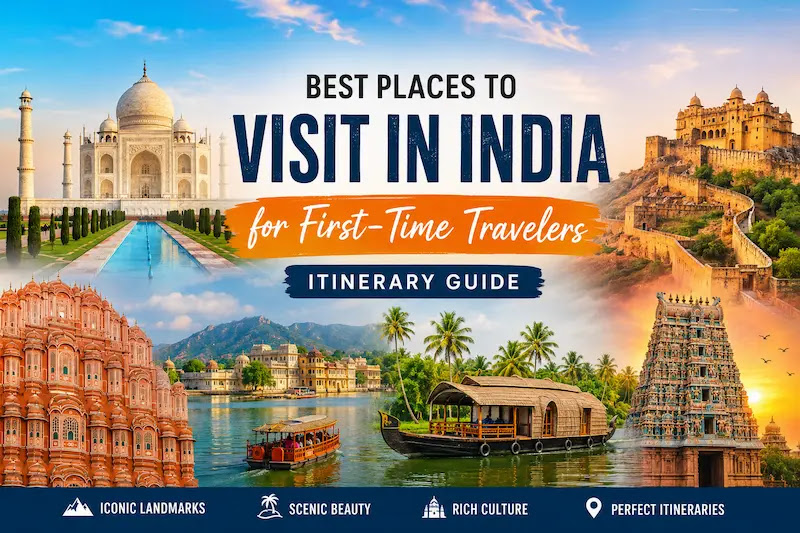
This guide is designed to help you do exactly that. Whether you’re interested in famous landmarks, cultural experiences, mountain adventures, relaxing beaches, wildlife safaris, or spiritual destinations, you’ll discover the best places to visit in India for your first trip. You’ll also find destination recommendations by region, travel style, and trip duration to help you build the perfect plan.
By the end of this guide, you’ll have a much clearer idea of where to go, how to plan your journey, and which destinations deserve a place on your first India adventure.
📑 Table of Contents
How to Choose Where to Visit in India
Many first-time visitors ask the same question:
“Where should I go in India?”
There isn’t a single correct answer because the best destinations depend on several factors. Before making your list, consider these four things.
1. Your Available Time
The number of days you have will greatly influence your travel route.
If you’re visiting India for only three to five days, it’s better to focus on one region rather than trying to cover the entire country. The popular Golden Triangle—Delhi, Agra, and Jaipur—is one of the best choices for a short first visit because it combines history, architecture, culture, and excellent transportation.
In seven to ten days, you can comfortably explore multiple cities or combine historical destinations with nature or beaches. Travellers with two weeks or more have enough time to experience two different regions, such as Rajasthan and Kerala or North India and Goa.
The key is to travel slower rather than adding too many destinations.
2. Your Interests
India offers experiences for almost every type of traveler.
If you love history and architecture, cities like Delhi, Agra, Jaipur, and Hampi should be high on your list. Beach lovers will enjoy Goa, Varkala, or the Andaman Islands, while mountain enthusiasts may prefer Manali, Leh, Gangtok, or Munnar.
Wildlife lovers can explore famous national parks such as Ranthambore, Jim Corbett, and Kaziranga, while spiritual travelers often choose Varanasi, Rishikesh, Haridwar, Bodh Gaya, or Amritsar.
Choosing destinations based on your interests makes your journey much more enjoyable than simply following the most popular tourist route.
3. The Time of Year
India’s climate varies significantly across the country.
The months from October to March are generally considered the best time for first-time visitors. During this period, much of the country enjoys pleasant weather that’s ideal for sightseeing.
If you’re planning to visit the Himalayas, late spring and summer are often better, while Kerala becomes particularly beautiful during the monsoon season with its lush green landscapes.
Checking the weather for your chosen destinations before booking flights can make a big difference to your experience.
4. Your Budget
One of the reasons India remains one of the world’s most popular travel destinations is its flexibility.
Budget travellers can enjoy comfortable hostels, affordable local transportation, and delicious street food without spending a fortune. Mid-range travellers have plenty of boutique hotels and quality restaurants to choose from, while luxury travellers can experience palace hotels, private tours, and premium resorts.
No matter your budget, careful planning allows you to experience the best of India without unnecessary expenses.
Best Places to Visit in India by Region
India is often described as a collection of many different countries within one nation. Each region has its own identity, traditions, cuisine, and landscapes. Understanding these regional differences makes it much easier to decide where to begin your first trip.
North India – History, Culture, and Iconic Landmarks
For most first-time travellers, North India offers the perfect introduction to the country. This region is home to many of India’s most famous monuments, royal palaces, historic cities, and spiritual destinations. It also has excellent transport connections, making it easy to travel between major attractions.
Kashmir: Known as “Paradise on Earth,” Kashmir captivates visitors with snow-capped mountains, serene lakes, colourful gardens, houseboats, and breathtaking valleys, making it one of India’s most beautiful and unforgettable travel destinations.
Ladakh: Ladakh offers dramatic mountain landscapes, crystal-clear lakes, ancient monasteries, thrilling road trips, and unique Tibetan culture, making it a dream destination for adventure seekers and nature lovers.
Rishikesh: Rishikesh combines spirituality, adventure, and natural beauty with yoga retreats, river rafting, peaceful Ganga Aarti, Himalayan scenery, and riverside cafés, making it perfect for relaxation and exploration.
Prayagraj: Prayagraj is renowned for the sacred Triveni Sangam, Kumbh Mela, historic temples, and rich cultural heritage, making it one of India’s most important pilgrimage and spiritual destinations.
Vrindavan: Vrindavan is a sacred town associated with Lord Krishna, famous for its beautiful temples, devotional atmosphere, colorful festivals, evening aarti, and vibr
Nainital: Nestled around a beautiful lake, Nainital offers peaceful boat rides, scenic mountain views, pleasant weather, lively markets, and nearby viewpoints, making it a popular family and honeymoon destination.
Mussoorie: Often called the Queen of Hills, Mussoorie delights visitors with misty mountains, waterfalls, colonial charm, scenic walks, cable car rides, and spectacular Himalayan views throughout the year.
Manali: Manali is a favourite mountain destination offering snow-covered peaks, adventure sports, picturesque valleys, trekking, river rafting, and easy access to the breathtaking landscapes of Himachal Pradesh.
Shimla: Shimla blends colonial architecture, pleasant weather, pine-covered hills, toy train rides, bustling Mall Road, and panoramic mountain views, making it one of India’s most popular hill stations.
Delhi: Delhi perfectly blends ancient history and modern life with iconic monuments, bustling markets, world-class museums, diverse cuisine, vibrant neighbourhoods, and rich cultural experiences for every traveller.
Agra: Agra is world-famous for the magnificent Taj Mahal, impressive Mughal architecture, historic forts, beautiful gardens, and fascinating heritage that attracts millions of visitors from around the globe.
Amritsar: Amritsar is best known for the breathtaking Golden Temple, warm Punjabi hospitality, delicious local cuisine, rich Sikh heritage, and the patriotic Wagah Border ceremony near the Pakistan border.
Dehradun: Surrounded by the Himalayan foothills, Dehradun offers pleasant weather, scenic forests, peaceful monasteries, nearby waterfalls, and serves as an excellent gateway to Mussoorie, Rishikesh, and Uttarakhand’s mountain destinations.
Ranikhet: Ranikhet is a peaceful hill station known for pine forests, panoramic Himalayan views, pleasant weather, scenic walking trails, beautiful gardens, and a relaxing escape from busy city life.
Sonipat: Sonipat offers a blend of history, spirituality, and modern development, with ancient temples, archaeological sites, local markets, and convenient access to Delhi, making it ideal for short cultural trips.

South India – Nature, Backwaters, and Timeless Culture
If North India impresses visitors with forts and monuments, South India wins hearts with lush landscapes, peaceful beaches, ancient temples, and relaxed travel experiences. The region is known for its tropical climate, flavourful cuisine, tea plantations, houseboats, and rich cultural traditions.
Kochi: Kochi blends colonial history, vibrant art, coastal charm, and Kerala’s rich culture with historic Fort Kochi, Chinese fishing nets, heritage buildings, delicious seafood, and lively cafés.
Munnar: Munnar is famous for its rolling tea plantations, misty hills, cool climate, scenic viewpoints, waterfalls, and wildlife, making it one of South India’s most beautiful hill stations.
Coorg: Known as the Scotland of India, Coorg offers lush coffee plantations, mist-covered hills, waterfalls, trekking trails, wildlife, and peaceful landscapes perfect for nature lovers and couples.
Alleppey: Alleppey is renowned for its tranquil backwaters, traditional houseboat cruises, coconut-lined canals, charming villages, and breathtaking sunsets, offering one of Kerala’s most relaxing travel experiences.
Hampi: Hampi showcases spectacular temple ruins, giant boulder landscapes, ancient monuments, and UNESCO World Heritage sites, making it a paradise for history enthusiasts, photographers, and adventure seekers.
Mysore: Mysore is celebrated for its magnificent palace, vibrant markets, cultural heritage, beautiful gardens, and traditional festivals, making it one of Karnataka’s most elegant and family-friendly destinations.
Madurai: Madurai is one of India’s oldest cities, famous for the magnificent Meenakshi Amman Temple, vibrant markets, rich Tamil culture, delicious cuisine, and centuries-old architectural heritage.
Ooty: Ooty charms visitors with lush tea gardens, cool weather, scenic lakes, toy train rides, botanical gardens, and peaceful mountain landscapes, making it a favourite hill station year-round.
Rameshwaram: Rameshwaram is a sacred pilgrimage destination known for Ramanathaswamy Temple, beautiful beaches, Pamban Bridge, spiritual significance, and stunning coastal scenery along the Bay of Bengal.
Tirupati: Tirupati attracts millions of pilgrims every year to the revered Sri Venkateswara Temple, offering a deeply spiritual experience surrounded by scenic hills and rich religious traditions.
Mahabalipuram: Mahabalipuram impresses visitors with ancient rock-cut temples, UNESCO World Heritage monuments, beautiful beaches, intricate stone carvings, and remarkable examples of Pallava architecture.
Kanyakumari: Kanyakumari, India’s southernmost tip, is famous for spectacular sunrise and sunset views, Vivekananda Rock Memorial, Thiruvalluvar Statue, and the meeting point of three seas.
Kovalam: Kovalam is a picturesque beach destination offering golden sands, swaying palm trees, lighthouse views, water sports, Ayurvedic wellness retreats, and a peaceful coastal atmosphere.
Puducherry (Pondicherry): Puducherry combines French colonial charm, colourful streets, peaceful beaches, heritage architecture, spiritual retreats, boutique cafés, and a relaxed atmosphere unlike anywhere else in India.
Varkala: Varkala is known for its dramatic sea cliffs, pristine beaches, stunning sunsets, yoga retreats, Ayurvedic therapies, and laid-back vibe, making it a favourite among international travellers.
Northeast India – India’s Hidden Paradise
The Northeast remains one of India’s least-explored regions, making it perfect for travellers looking for pristine nature and unique cultural experiences.
Ziro Valley, Arunachal Pradesh: Ziro Valley is renowned for its lush green landscapes, scenic rice fields, Apatani tribal culture, pleasant climate, and peaceful atmosphere, making it a perfect destination for nature and culture lovers.
Nohkalikai Falls, Meghalaya: Nohkalikai Falls, India’s tallest plunge waterfall, captivates visitors with its dramatic cliffs, turquoise plunge pool, breathtaking viewpoints, and spectacular scenery, especially during and after the monsoon season.
Shillong, Meghalaya: Shillong, often called the Scotland of the East, is known for its rolling hills, pleasant weather, waterfalls, vibrant culture, scenic viewpoints, and lively music scene, making it a popular Northeast India destination.
Kaziranga National Park, Assam: A UNESCO World Heritage Site, Kaziranga National Park is famous for its one-horned rhinoceroses, diverse wildlife, thrilling jeep safaris, birdwatching opportunities, and lush grassland landscapes.
Gorichen Peak, Arunachal Pradesh: Gorichen Peak, Arunachal Pradesh’s highest mountain, attracts trekkers with snow-covered landscapes, alpine meadows, breathtaking Himalayan views, and challenging trails perfect for experienced adventure enthusiasts.
Tsomgo Lake, Sikkim: Surrounded by snow-capped mountains, Tsomgo Lake enchants visitors with crystal-clear waters, seasonal wildflowers, yak rides, and breathtaking Himalayan scenery throughout much of the year.
Tawang Monastery, Arunachal Pradesh: India’s largest monastery, Tawang Monastery offers stunning mountain views, peaceful Buddhist traditions, colorful prayer halls, ancient scriptures, and a deeply spiritual atmosphere in the Eastern Himalayas.
Umiam Lake, Meghalaya: Umiam Lake is a scenic reservoir surrounded by forested hills, offering boating, kayaking, peaceful picnic spots, breathtaking sunsets, and a refreshing escape near Shillong.
Cherrapunji, Meghalaya: Cherrapunji is famous for spectacular waterfalls, living root bridges, limestone caves, lush green valleys, and dramatic monsoon landscapes, making it one of Northeast India’s top nature destinations.
Mawsynram, Meghalaya: Recognized as one of the wettest places on Earth, Mawsynram features mist-covered hills, unique caves, lush forests, and breathtaking scenery shaped by abundant rainfall throughout the year.
Gangtok, Sikkim: Gangtok combines stunning Himalayan views, colorful monasteries, vibrant markets, adventure activities, and rich Buddhist culture, offering a perfect blend of nature, spirituality, and modern mountain-town charm.
Loktak Lake, Manipur: Loktak Lake is India’s largest freshwater lake, renowned for its floating phumdis, scenic boat rides, rich biodiversity, and the unique Keibul Lamjao National Park nearby.
Kanchenjunga; Kanchenjunga, the world’s third-highest mountain, offers breathtaking Himalayan views, snow-covered peaks, trekking opportunities, and unforgettable landscapes from destinations like Gangtok, Darjeeling, and Pelling.
East India – Heritage, Hills, and Coastal Charm
Although often overlooked by first-time visitors, East India rewards travelers with rich history, stunning landscapes, and unique cultural experiences.
Darjeeling, West Bengal: Darjeeling is famous for its lush tea gardens, Himalayan views, UNESCO-listed toy train, pleasant climate, colonial charm, and spectacular sunrise over Kanchenjunga from Tiger Hill.
Bodh Gaya, Bihar: Bodh Gaya is one of Buddhism’s holiest pilgrimage sites, where Lord Buddha attained enlightenment. Visit the Mahabodhi Temple, peaceful monasteries, and meditation centers from around the world.
Kolkata, West Bengal: Kolkata blends colonial architecture, rich literary heritage, vibrant festivals, iconic landmarks, delicious Bengali cuisine, bustling markets, and a thriving arts scene, offering an unforgettable cultural experience.
Konark, Odisha: Konark is renowned for the UNESCO-listed Sun Temple, remarkable stone carvings, ancient architecture, nearby beaches, and rich cultural heritage, making it one of Odisha’s most famous attractions.
Digha, West Bengal: Digha is a popular seaside destination known for its sandy beaches, beautiful sunsets, fresh seafood, water activities, and relaxed coastal atmosphere, perfect for family holidays and weekend getaways.
Puri, Odisha: Puri attracts visitors with the sacred Jagannath Temple, golden beaches, vibrant festivals, local seafood, and its proximity to Konark, making it a perfect blend of spirituality and relaxation.
Deoghar, Jharkhand: Deoghar is a revered pilgrimage destination famous for the Baidyanath Jyotirlinga Temple, spiritual atmosphere, religious festivals, and peaceful surroundings that attract devotees throughout the year.
Rajrappa, Jharkhand: Rajrappa is known for the sacred Chhinnamasta Temple, scenic river confluence, peaceful surroundings, and spiritual significance, making it an important pilgrimage and cultural destination in Jharkhand.
Nalanda, Bihar: Nalanda is home to the ancient Nalanda University ruins, a UNESCO World Heritage Site showcasing India’s rich educational heritage, Buddhist history, magnificent monasteries, and remarkable archaeological remains.
West India – Royal Heritage Meets Coastal Beauty
West India is incredibly diverse. Here you’ll find India’s financial capital, colorful desert cities, luxury heritage hotels, and world-famous beaches.
Mumbai, Maharashtra: Mumbai is India’s financial capital, offering iconic landmarks, vibrant nightlife, Bollywood, colonial architecture, bustling markets, diverse cuisine, scenic Marine Drive, and an energetic atmosphere unlike any other city.
Goa: Goa is India’s most popular beach destination, famous for golden beaches, Portuguese heritage, vibrant nightlife, water sports, seafood, historic churches, and a relaxed tropical atmosphere throughout the year.
Kutch, Gujarat: Kutch is renowned for the breathtaking White Rann salt desert, colorful handicrafts, traditional villages, wildlife sanctuaries, and the vibrant Rann Utsav celebrating Gujarat’s rich cultural heritage.
Jaipur: Jaipur, the Pink City, is famous for magnificent forts, royal palaces, vibrant bazaars, colourful culture, traditional crafts, and delicious Rajasthani cuisine, offering an unforgettable glimpse into India’s royal heritage.
Jaisalmer: Located in the heart of the Thar Desert, Jaisalmer charms visitors with its golden sandstone fort, camel safaris, desert camping, folk performances, and stunning sunsets over rolling sand dunes.
Diu: Diu offers tranquil beaches, Portuguese-era forts, historic churches, scenic coastal views, water sports, and a relaxed atmosphere, making it an ideal destination for a peaceful seaside getaway.
Alibag, Maharashtra: Alibag is a charming coastal town known for clean beaches, historic sea forts, water sports, coconut groves, and relaxing weekend escapes just a short ferry ride from Mumbai.
Alwar, Rajasthan: Alwar is famous for majestic forts, beautiful palaces, scenic lakes, and the nearby Sariska Tiger Reserve, offering a perfect blend of history, wildlife, and natural beauty.
Mount Abu, Rajasthan: Mount Abu, Rajasthan’s only hill station, offers cool weather, scenic viewpoints, Nakki Lake, lush forests, and the magnificent Dilwara Temples, making it a refreshing escape year-round.
Gir National Park, Gujarat: Gir National Park is the only place in the world where you can see Asiatic lions in the wild, alongside diverse wildlife, thrilling jeep safaris, and beautiful dry forests.
Udaipur: Known as the City of Lakes, Udaipur features magnificent palaces, scenic boat rides, romantic sunsets, heritage hotels, and charming old streets, creating one of India’s most picturesque travel experiences.
Best Places to Visit in India Season-wise
India is a year-round destination, but the best places to visit depend on the season. From snow-covered mountains in winter to lush green landscapes during the monsoon, every season offers unique travel experiences. Choosing destinations based on the weather helps you enjoy comfortable sightseeing and make the most of your trip.
Winter (October to March)
Winter is the most popular travel season in India. The weather is cool, dry, and pleasant across most parts of the country, making it ideal for sightseeing, festivals, wildlife safaris, and outdoor activities.
Best places – Kashmir, Jaipur, Udaipur, Jaisalmer, Delhi, Agra, Varanasi, Amritsar, Rann of Kutch, Goa, Kochi, Alleppey, Mysore, Hampi, Puri
Best for: Heritage tours, cultural experiences, wildlife safaris, beaches, and desert adventures.
Summer (April to June)
As temperatures rise in the plains, travelers head to India’s beautiful hill stations and mountain regions. The pleasant weather and cool climate make summer the perfect time to explore the Himalayas and Western Ghats.
Best places Manali, Shimla, Mussoorie, Nainital, Ranikhet, Kashmir, Ladakh, Gangtok, Shillong, Tawang, Munnar, Ooty, Coorg, Mount Abu, Darjeeling
Best for: Mountain vacations, trekking, nature, family holidays, and adventure activities.
Monsoon (July to September)
Monsoon transforms many parts of India into lush green landscapes with flowing waterfalls and mist-covered hills. Although heavy rainfall may affect travel in some regions, this season is perfect for nature lovers and those looking for fewer crowds.
Best places – Kerala (Munnar, Alleppey, Kochi, Varkala), Coorg, Cherrapunji, Shillong, Mawsynram, Valley of Flowers, Udaipur, Goa, Mahabalipuram, Lonavala, Kodaikanal
Best for: Nature photography, waterfalls, wellness retreats, romantic getaways, and scenic road trips.
India’s Top Destinations Across Every Category
India offers an extraordinary range of travel experiences, making it a destination for every type of traveller. From serene hill stations and sun-kissed beaches to adrenaline-filled adventures, wildlife sanctuaries, and centuries-old historical landmarks, each destination has its own unique character. Sacred pilgrimage sites provide spiritual enrichment, while picturesque islands and nature retreats are perfect for relaxation and outdoor exploration. Even India’s legendary haunted locations attract travelers seeking something unusual. Explore the best places across every travel category to plan a memorable journey that matches your interests and travel style.

Hill Stations in India –
Manali, Himachal Pradesh
Shimla, Himachal Pradesh
Darjeeling, West Bengal
Ooty, Tamil Nadu
Munnar, Kerala
Nainital, Uttarakhand
Mussoorie, Uttarakhand
Gulmarg, Jammu & Kashmir
Shillong, Meghalaya
Kodaikanal, Tamil Nadu
Leh-Ladakh (UT)
Coorg Karnataka
Gangtok Sikkim
Beaches in India –
Baga Beach, Goa
Radhanagar Beach, Andaman
Varkala Beach, Kerala
Marina Beach, Chennai
Calangute Beach, Goa
Kovalam Beach, Kerala
Gokarna Beach, Karnataka
Juhu Beach, Mumbai
Elephanta Beach, Havelock
Puri Beach, Odisha
Paradise Beach, Pondicherry
Dhanushkodi Tamil Nadu
Spiritual Places in India –
Varanasi, Uttar Pradesh
Ayodhya Uttar Pradesh
Kedarnath, Uttarakhand
Tirupati Balaji, Andhra Pradesh
Golden Temple, Amritsar
Bodh Gaya, Bihar
Mathura-Vrindavan
Vaishno Devi, Jammu
Somnath Temple, Gujarat
Puri Jagannath, Odisha
Rishikesh & Haridwar, Uttarakhand
Rameswaram, Tamil Nadu
Nature & Wildlife in India –
Jim Corbett National Park, Uttrakhand
Kaziranga National Park, Assam
Sundarbans Tiger Reserve, West Bengal
Ranthambore National Park, Rajasthan
Gir National Park, Gujrat
Periyar Wildlife Sanctuary, Kerala
Bandipur National Park, Karnataka
Hemis National Park, Ladakh
Satpura National Park, Madhya Pradesh
Bandhavgarh National Park, Madhya Pradesh
Valley of Flowers Uttarakhand
Kanha National Park Madhya Pradesh
Historical Places in India –
Taj Mahal, Agra
Red Fort, Delhi
Hampi, Karnataka
Qutub Minar, Delhi
Gateway of India, Mumbai
Jaisalmer Fort, Rajasthan
Amer Fort, Jaipur
Konark Sun Temple, Odisha
Sanchi Stupa, Madhya Pradesh
Golconda Fort, Hyderabad
Ajanta & Ellora Caves, Maharashtra
Haunted Places in India –
Bhangarh Fort, Rajasthan
Dumas Beach, Gujarat
Kuldhara Village, Rajasthan
Ramoji Film City, Hyderabad
Agrasen ki Baoli, Delhi
Shaniwarwada Fort, Pune
Dow Hill, Kurseong
Lambi Dehar Mines, Mussoorie
D’Souza Chawl, Mumbai
South Park Cemetery, Kolkata
Top Destinations for Adventure Activities in India
Adventure travel in India is about more than just adrenaline—it’s an opportunity to explore breathtaking landscapes, challenge yourself, and experience the country’s diverse natural beauty. With experienced guides, well-known adventure destinations, and activities for every skill level, it’s an ideal destination for thrill seekers and nature lovers alike. Whether you’re trekking, rafting, paragliding, or diving, every adventure promises lasting memories and a deeper connection with India’s incredible landscapes.

Camping & Glamping
Manali (Himachal Pradesh)
Rishikesh (Uttarakhand)
Jaisalmer (Rajasthan)
Wayanad (Kerala)
Sonamarg (Jammu and Kashmir)
Skydiving & Paragliding
Bir Billing (Himachal Pradesh)
Aamby Valley (Maharashtra)
Kamshet (Maharashtra)
Narnaul (Haryana)
Deesa (Gujarat)
Water Rafting & Scuba Diving
Andaman and Nicobar Islands
Rishikesh (Uttarakhand)
Netrani Island (Karnataka)
Goa (Goa)
Zanskar (Ladakh)
Trekking & Rock Climbing
Hampi (Karnataka)
Ladakh (Union Territory)
Manali (Himachal Pradesh)
Badami (Karnataka)
Auli (Uttarakhand)
Jungle Safari & Wildlife Photography
Jim Corbett National Park (Uttarakhand)
Ranthambore National Park (Rajasthan)
Kaziranga National Park (Assam)
Bandhavgarh National Park (Madhya Pradesh)
Kanha National Park (Madhya Pradesh)
Snowboarding & Ice Skating
Gulmarg (Jammu and Kashmir)
Auli (Uttarakhand)
Solang Valley (Himachal Pradesh)
Shimla (Himachal Pradesh)
Rohtang Pass (Himachal Pradesh)
Top 20 Tourist Spots in India: You Must Visit
India is home to countless iconic attractions, but some places stand out for their historical significance, natural beauty, and cultural importance. India’s top tourist spots attract millions of visitors every year with their rich history, stunning architecture, breathtaking landscapes, and cultural significance. No trip to India is complete without visiting these iconic destinations.

- Taj Mahal – Agra, Uttar Pradesh
- Qutub Minar – Delhi
- Amber Palace – Jaipur, Rajasthan
- Hawa Mahal – Jaipur, Rajasthan
- Gateway of India – Mumbai, Maharashtra
- Red Fort – Delhi
- Mehrangarh Fort – Jodhpur, Rajasthan
- Agra Fort – Agra, Uttar Pradesh
- Lotus Temple – Delhi
- Humayun’s Tomb – Delhi
- Victoria Memorial – Kolkata, West Bengal
- Fatehpur Sikri – Agra, Uttar Pradesh
- Jallianwala Bagh – Amritsar, Punjab
- City Palace – Udaipur, Rajasthan
- Golconda Fort – Hyderabad, Telangana
- Mysore Palace – Mysore, Karnataka
- Ajanta & Ellora Caves – Aurangabad, Maharashtra
- Brihadisvara Temple – Thanjavur, Tamil Nadu
- Sun Temple – Konark, Odisha
- Charminar – Hyderabad, Telangana
Recommended Routes for Your First India Trip
Whether you’re visiting India for the first time or planning a return trip, choosing the right travel route can make your journey smoother and more rewarding. These sample routes combine nearby destinations with similar experiences, helping you maximise your time while exploring India’s diverse landscapes, cultures, and attractions.

Golden Triangle
India’s most popular tourist circuit, the Golden Triangle connects Delhi, Agra, and Jaipur. This classic route is perfect for first-time visitors, offering iconic landmarks like the Taj Mahal, grand Mughal monuments, royal forts, colourful, bazaars, and rich cultural experiences within a week.
Ideal duration: 5–7 days
Rajasthan Circuit
Explore the royal heritage of Rajasthan by visiting Jaipur, Jodhpur, Udaipur, Jaisalmer, Mount Abu, and Pushkar. This route showcases magnificent forts, luxurious palaces, desert landscapes, vibrant markets, camel safaris, and traditional Rajasthani culture.
Ideal duration: 8–12 days
Kerala Circuit
Experience Kerala’s natural beauty by travelling through Kochi, Munnar, Thekkady, Alleppey, and Kovalam or Varkala. Enjoy misty tea plantations, wildlife sanctuaries, tranquil backwaters, pristine beaches, and authentic Ayurvedic wellness experiences.
Ideal duration: 7–10 days
South India Circuit
Discover South India’s cultural and natural treasures by exploring Bengaluru, Mysore, Coorg, Ooty, Madurai, Rameswaram, Kochi, and Munnar. This route combines ancient temples, hill stations, colonial towns, scenic landscapes, and delicious regional cuisine.
Ideal duration: 10–14 days
Himalayan Route
Perfect for mountain lovers, this route includes Shimla, Manali, Dharamshala, Leh-Ladakh, Gangtok, Darjeeling, Shillong, and Tawang. Expect snow-capped peaks, alpine lakes, monasteries, trekking trails, and breathtaking Himalayan scenery.
Ideal duration: 10–15 days
Spiritual India Route
Explore India’s sacred heritage by visiting Varanasi, Prayagraj, Ayodhya, Rishikesh, Haridwar, Amritsar, Bodh Gaya, Tirupati, Rameswaram, and Puri. This journey offers spiritual experiences, ancient temples, river ceremonies, and pilgrimage sites of great cultural significance.
Ideal duration: 10–15 days
Relaxing Beach Route
Relax along India’s stunning coastline by visiting Goa, Gokarna, Varkala, Kovalam, Alleppey, Kochi, Puducherry, Mahabalipuram, Diu, and the Andaman Islands. Enjoy golden beaches, water sports, coastal cuisine, sunsets, and laid-back tropical vibes.
Ideal duration: 8–14 days
Northeast Paradise Route
Discover the untouched beauty of Northeast India by exploring Gangtok, Darjeeling, Shillong, Cherrapunji, Kaziranga National Park, Tawang, Ziro Valley, and Loktak Lake. This scenic route offers breathtaking Himalayan views, cascading waterfalls, living root bridges, wildlife, vibrant tribal cultures, peaceful monasteries, and some of India’s most unspoiled landscapes.
Ideal duration: 10–15 days
Discover unforgettable destinations and create memories that will last a lifetime.
Frequently Asked Questions
Where should first-time travelers visit in India?
First-time travelers should visit Delhi, Agra, Jaipur, Kerala, Goa, or Varanasi. These destinations offer a perfect mix of history, culture, architecture, nature, and unforgettable travel experiences.
How many days are enough for a first trip to India?
A 10 to 14-day trip is ideal for first-time visitors to India. This allows you to explore multiple destinations at a comfortable pace, experience the country’s diverse culture, visit iconic landmarks, and enjoy local cuisine without spending too much time in transit.
Which is the most visited tourist place in India?
The Taj Mahal in Agra is India’s most visited tourist attraction. This UNESCO World Heritage Site attracts millions of visitors every year with its magnificent Mughal architecture and timeless beauty.
Which places in India are best for nature lovers?
Nature lovers should visit Kashmir, Ladakh, Munnar, Coorg, Shillong, Cherrapunji, Valley of Flowers, and Kaziranga National Park for breathtaking landscapes, wildlife, waterfalls, mountains, and scenic beauty.
Can I visit India on a budget?
Yes, India is one of the world’s most affordable travel destinations. Budget travellers can save money by using trains, staying in budget accommodations, and enjoying delicious local food throughout the trip.