
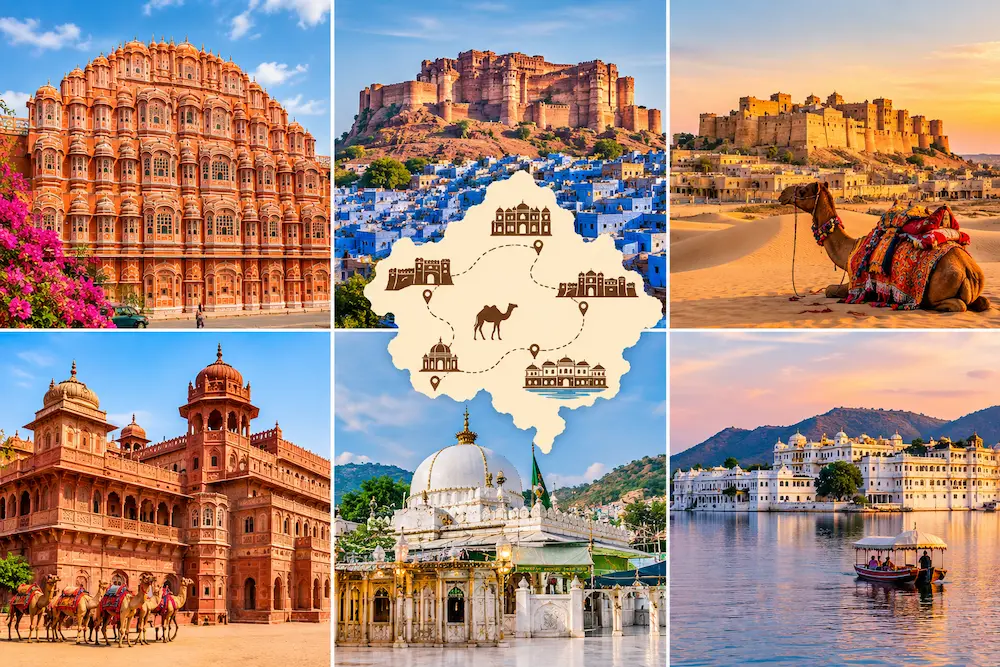
Rajasthan in winter is best explored slowly, when the desert air is crisp, the forts are comfortable to visit, and evenings invite long dinners beneath open skies. Over 10 days, this itinerary connects the state’s most rewarding stops: Jaipur’s grand palaces, Bikaner’s quieter heritage, Jaisalmer’s desert landscapes, Jodhpur’s blue lanes, Udaipur’s lakeside calm and Ajmer’s spiritual character. The route is busy, but carefully paced to balance sightseeing with travel time. You’ll move between royal cities, old bazaars, historic havelis, and sand-dune country, while getting a practical sense of how Rajasthan changes from one region to the next. In this guide, I share the route I recommend, the transport options I found most practical, the stays worth considering, winter planning tips, and the places I would prioritise when travelling with limited time.
My Trip At a Glance
| Parameter | Details |
|---|---|
| Route Travelled | Jaipur ➔ Bikaner ➔ Jaisalmer (Sam Dunes) ➔ Jodhpur ➔ Ranakpur ➔ Udaipur (with optional Pushkar & Ajmer excursion) |
| Mode of Transport | Private AC Sedan / SUV with dedicated driver |
| Accommodation Used | Mix of authentic heritage havelis, boutique walled-city stays, lakeside heritage hotels, and eco-conscious desert canvas camps |
| Total Spent | ₹88,500 per person (for a comfortable mid-range trip including heritage stays, private transport, meals, fort entries, and experiences) |
| Total Road Distance | ~1,450 km across primary driving legs |
| Trip Highlights | Living fort exploration in Jaisalmer (Sonar Qilla), starlit desert camping in Sam Dunes, hands-on block-printing in Bagru, 1,444 carved marble pillars at Ranakpur, and Lake Pichola sunset boat ride in Udaipur |
| Official Tourism Board | Rajasthan Tourism Official Portal (Useful for checking tourism information, festival dates, monument details and available visitor services.) |
| My Key Takeaway | Smart sequencing from Jaipur through the Thar Desert to Udaipur avoids exhausting backtracking, and winter layering is essential — sunny 20°C days can quickly turn into chilly 5°C desert nights. |
Route Map & Logistics Overview
Transport Comparison
| Transport Mode | Pros | Cons | Best Suited For | Real-World Cost |
|---|---|---|---|---|
|
Private Taxi / Driver
(Recommended) |
|
|
Families, couples and small groups (2–4 travellers) | ₹3,800–₹4,500 / day (AC Sedan or SUV) |
| Indian Railways (Train) |
|
|
Budget backpackers and solo travellers | ₹300–₹1,200 per long-distance leg |
| Volvo / RSRTC Express Bus |
|
|
Solo and mid-range budget travellers | ₹400–₹900 per leg |
Why Visit Rajasthan in Winter?
Winter (November to February) is the undisputed sweet spot for exploring Rajasthan, particularly when your itinerary involves hours on foot across expansive fort complexes, open palace courtyards, narrow old-city bazaars, and exposed desert settlements.
From late October through February, daytime weather shifts from scorching to delightfully crisp. Official data from Rajasthan Tourism places the general winter range between 10°C and 27°C. Mid-day sunshine is gentle enough to enjoy a stroll through Jaipur’s Johari Bazaar or a climbing tour of Mehrangarh Fort without the draining 40°C+ heat that dominates the summer months.
However, travellers often underestimate the sharp temperature plunge after dusk—especially in western desert hubs like Jaisalmer, Bikaner, and Jodhpur. While afternoons are pleasant in lightweight cottons, desert nights in December and January frequently drop to 4°C–7°C as the sand rapidly loses heat.
Detailed Day-by-Day Itinerary
The 10-day loop hits Rajasthan’s classic royal circuit. The sequence is intentionally designed to minimize backtracking, maintain reasonable driving legs under 6 hours, and place you at key monuments for optimal sunrise/sunset light.
Day 1 – Jaipur: Walled City Arrival & Sunset Ramparts
Morning/Noon: Arrive at Jaipur (JAI Airport or Jaipur Junction); check into a heritage haveli in Bani Park, C-Scheme, or within the Walled City.
Afternoon: Head to Albert Hall Museum (Indo-Saracenic architecture looks striking in afternoon light) and stroll through Ram Niwas Garden.
Evening: Street-food crawl through Johari Bazaar and Vasudev Devnani / Rawat Mishtan Bhandar: grab piping-hot pyaaz kachori, mirchi bada, and masala chai. Head up to Nahargarh Fort ramparts via auto or cab for a sunset view over the Pink City as the city lights click on.
Stay: Walled city heritage boutique
Skip taking an auto all the way up the steep winding road to Nahargarh at dusk—it gets chilly fast. Hire a local taxi for the round trip, and carry a windbreaker for the exposed fort walls.
Day 2 – Jaipur: Fort Architecture & Living Crafts
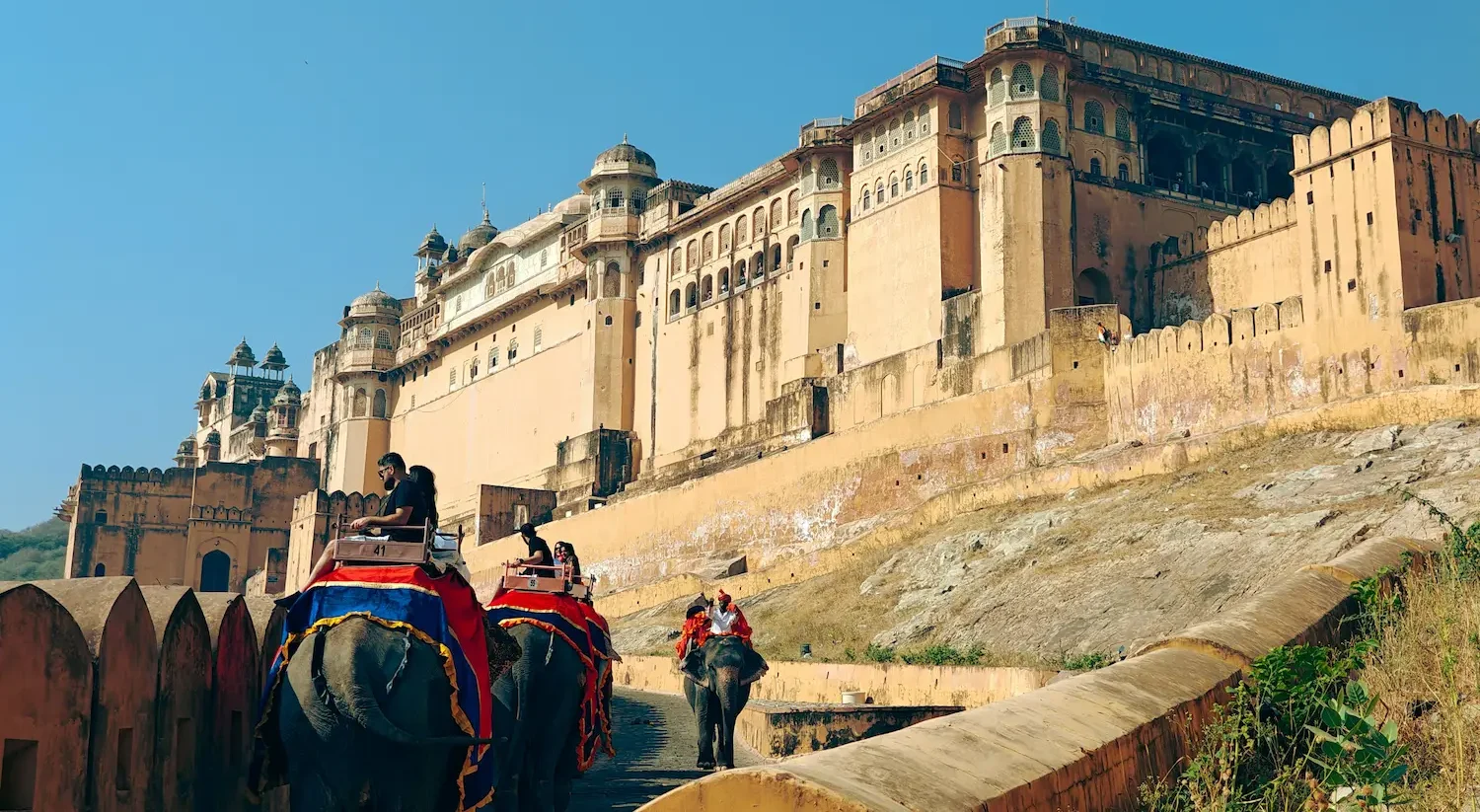
Sunrise/Early Morning: Reach Amber Fort by 8:00 AM to beat the tourist buses and photobombers. Explore the Sheesh Mahal (Mirror Palace) and walk the elevated connector corridor to Jaigarh Fort for panoramic valley views.
Late Morning: Head into the Walled City for City Palace (pay extra for the Chandra Mahal inner courtyard access if budget permits) and Jantar Mantar UNESCO astronomical observatory.
Afternoon: Take a 45-minute drive to Bagru or Sanganer for a hands-on Dabu (mud-resist) block-printing workshop directly with artisan families.
Evening: Attend the sound-and-light show at Amber Fort or wander through the lit-up night markets of Tripolia Bazaar.
Day 3 – Jaipur → Bikaner (330 km, ~5.5 hrs)
Morning: Early departure via NH52 through changing landscapes from semi-arid plains to scrub desert.
En Route: Stop at the National Research Centre on Camels (just before Bikaner city entry) around 2:30 PM to taste fresh camel-milk ice cream and watch herds return from grazing.
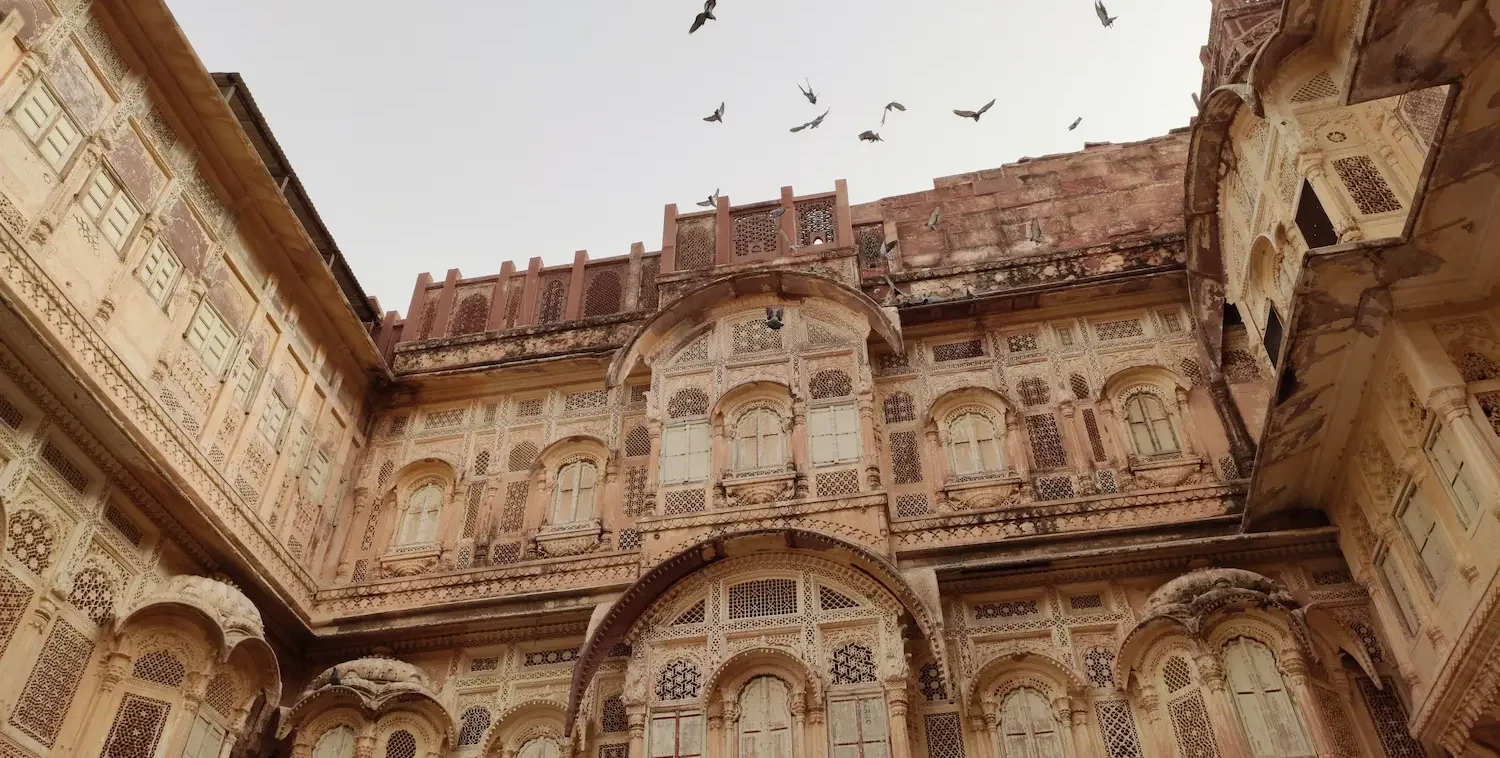
Afternoon: Explore Junagarh Fort—unlike most Rajasthani forts built on hilltops, Junagarh is a formidable lowland fort featuring unlooted royal interiors like the Karan Mahal and Anup Mahal.
Evening: Visit Karni Mata Temple in Deshnoke (25 km away) if comfortable with the sacred rats (kabbas); otherwise, take a tuk-tuk tour through Bikaner’s old city lanes to admire red-sandstone Rampuria Havelis and sample authentic, freshly fried Bikaneri Bhujia.
Stay: Heritage hotel near Junagarh
Day 4 – Bikaner → Jaisalmer (330 km, ~5.5 hrs)
Morning: Drive west across the Thar Desert along the smooth stretch of NH11 toward Jaisalmer.
Late Afternoon: Reach Jaisalmer (The Golden City). Walk into Jaisalmer Fort (Sonar Qilla)—one of the world’s few fully operational “living forts,” housing roughly a quarter of the old city’s population.
Sunset: Find a rooftop cafe near the fort walls (Killa Corner area) to watch the yellow sandstone turn deep amber as the sun dips.
Dinner: Order traditional Dal Baati Churma paired with local Ker Sangri (wild desert bean curry cooked in buttermilk and spices).
Stay: Fort-view heritage haveli
Living inside the fort is atmospheric, but water infrastructure in the ancient structure is fragile. Staying just outside the fort walls (e.g., Near Hanuman Circle or Sunset Point) reduces environmental strain while giving you a better exterior view of the illuminated fort at night.
Day 5 – Jaisalmer: Merchants Havelis & Desert Camp
Morning: Explore the intricately carved facades of Patwon Ki Haveli, Nathmal Ki Haveli, and Salim Singh Ki Haveli.
Afternoon (3:30 PM): Transfer toward Sam Sand Dunes (45 km) or the quieter Khuri Dunes.
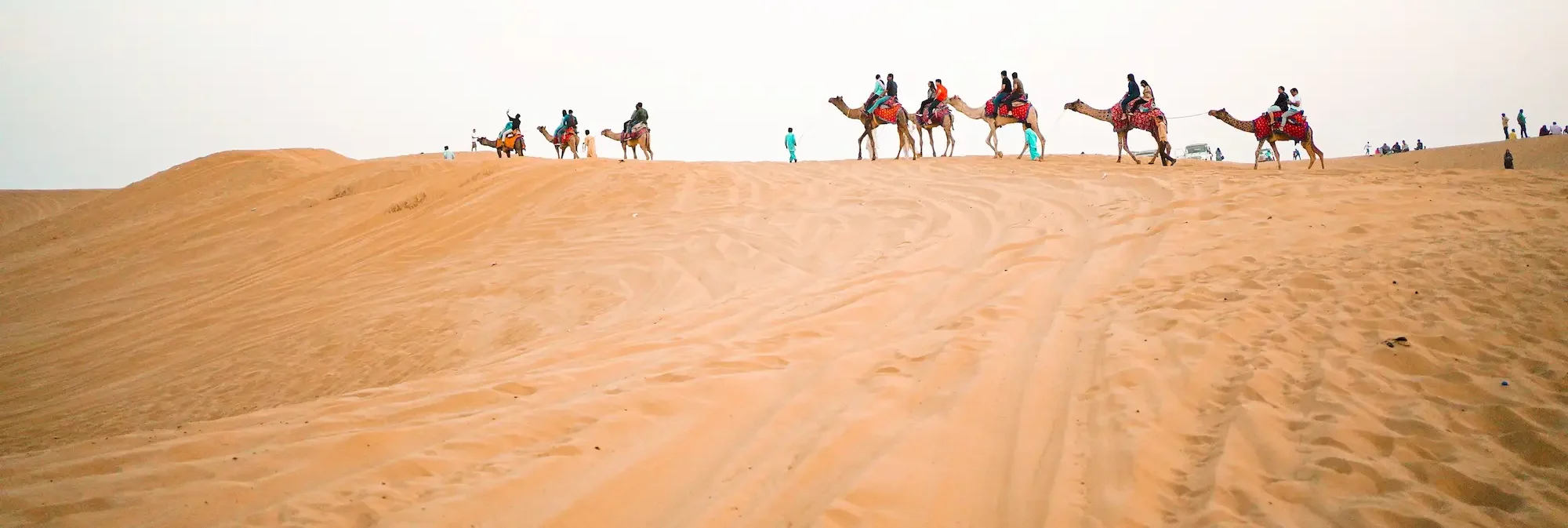
Sunset: Pre-book a non-motorized camel safari or a 4×4 dune bashing drive across the ripples.
Evening: Cultural evening around a camp bonfire with Manganiyar folk musicians and Kalbelia dancers.
Night: Sleep under desert stars in heavy-canvas Swiss tents or open sky beds.
Stay: Eco-conscious desert camp with solar heating and thermal bedding
Desert temperatures drop drastically after 9:00 PM (often reaching 4°C–7°C). Ensure your camp supplies heavy razais (traditional quilts) or hot water bags, and pack a thermal base layer.
Day 6 – Jaisalmer → Jodhpur (285 km, ~4.5 hrs)
Morning: Depart post-breakfast. Take a short 30-minute detour to Kuldhara, the haunted 13th-century abandoned Paliwal Brahmin village.
Afternoon: Drive to Jodhpur (The Blue City). Check in and head straight to Mehrangarh Fort, towering 400 feet above the city skyline. Use the official audio guide—it is widely considered one of the best-curated audio tours in Asia.
Sunset: Walk down from the fort ramparts toward Jaswant Thada (marble cenotaph) for sunset reflections across the lake.
Evening: Explore Toorji Ka Jhalra (stepwell) and the surrounding Sardar Market clocktower area. Grab a glass of famous Makhaniya Lassi at Shri Mishrilal Hotel.
Stay: Old City heritage hotel or boutique stay
Day 7 – Jodhpur → Ranakpur → Udaipur (260 km, ~5.5 hrs)
(Rerouted: Skipping the Ajmer detour here creates a smoother geographical line directly south to Udaipur).
Morning: Early morning walk through the blue-painted alleyways of Navchokiya behind Mehrangarh Fort.
En Route: Drive south through the Aravalli hills toward Ranakpur Jain Temple. Spend 1.5 hours inside marveling at the 1,444 uniquely carved marble pillars where no two designs are identical.
Late Afternoon: Continue the scenic winding drive through the hills into Udaipur (City of Lakes).
Evening: Check into a lakeside property along Lake Pichola; relax with a sunset boat cruise past Jag Mandir and Lake Palace.
Stay: Lakeside heritage stay
Day 8 – Udaipur: Palaces & Lake Culture
Morning: Visit Udaipur City Palace early at 9:00 AM to see the Mor Chowk (Peacock Courtyard) and glass mosaics before noon crowds arrive. Walk next door to Jagdish Temple.
Afternoon: Stroll through Saheliyon Ki Bari (Garden of the Maids of Honor) with its natural-gravity fountains and marble elephants. Late Afternoon: Drive up to Sajjangarh (Monsoon Palace) (opens 9:00 AM–6:00 PM) for sunset views overlooking the Aravalli range and Udaipur’s lakes.
Evening: Watch the traditional Dharohar Rajasthani folk dance show at Bagore Ki Haveli (Gangaur Ghat) at 7:00 PM (book tickets online or at the counter by 5:00 PM).
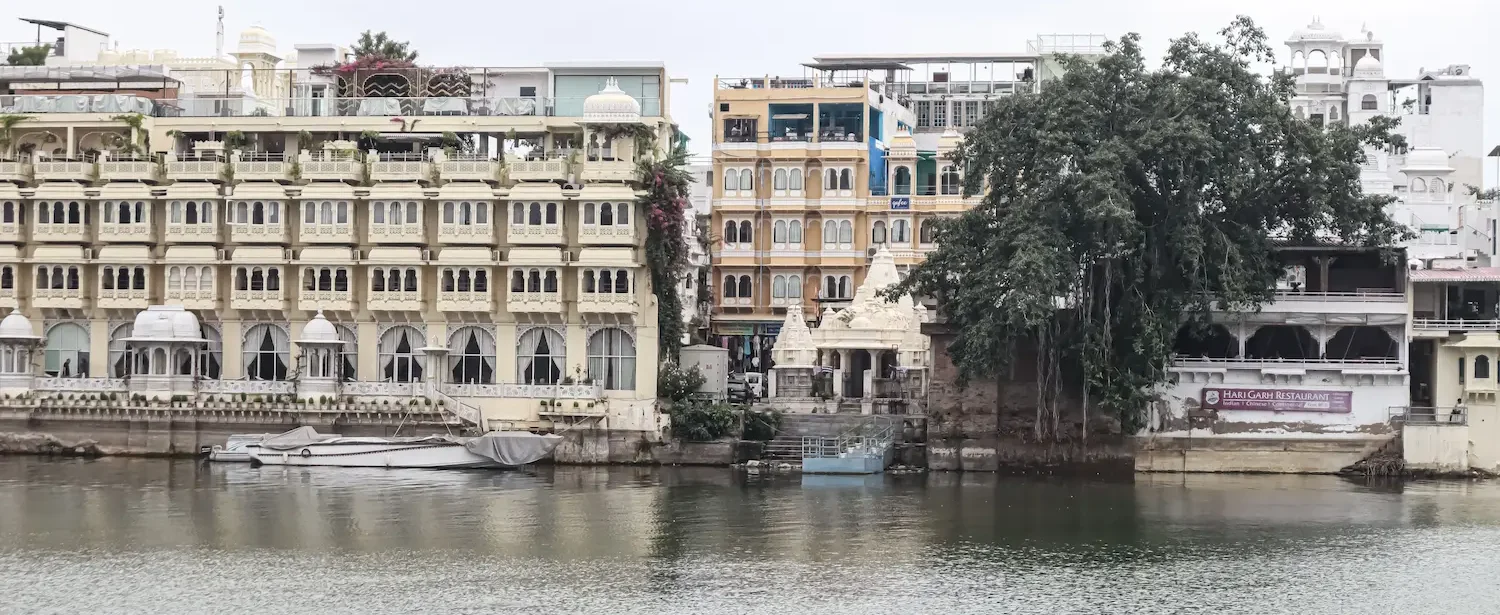
Day 9 – Day Trip: Pushkar & Ajmer Excursion
Morning: Option A: Take a day excursion to Pushkar (3 hours drive north) to walk around the sacred Pushkar Lake, visit the rare 14th-century Brahma Temple, and browse hip bohemian market streets.
Afternoon: Visit Ajmer Sharif Dargah in neighboring Ajmer (cover your head, dress conservatively, and store footwear outside).
Alternative Option B: Remain in Udaipur to explore Shilpgram (rural arts and crafts complex) or take a day trip to Kumbhalgarh Fort (housing the second-longest continuous wall in the world after the Great Wall of China).
Day 10 – Udaipur Departure
Morning: Last-minute shopping for Udaipur’s famous miniature Pichwai paintings, handmade leather journals, and silver jewelry in Hathi Pol or Bada Bazaar.
Afternoon: Departure from Maharana Pratap Airport (UDR) or Udaipur City Railway Station.
My Real-World Trip Budget
Planning a 10-day road trip across Rajasthan requires balancing comfort with value. During my winter circuit from Jaipur to Udaipur, traveling as a pair allowed us to split fixed costs like our private car and hotel rooms comfortably. Here is the exact breakdown of what I spent per person for a seamless, mid-range heritage experience.
| Expense Category | Real Trip Cost Details (2 Persons Sharing) | My Actual Cost (Per Person) |
|---|---|---|
| Cab & Private Driver | Hired a dedicated AC Sedan for 10 days covering ~1,450 km, inclusive of fuel, state highway tolls, parking fees, and driver’s daily allowance (₹42,000 total) | ₹21,000 |
| Accommodation | Spent 9 nights across authentic heritage havelis, boutique walled-city stays, and an eco-desert canvas camp in Sam Sand Dunes averaging ~₹5,000/night per room (₹45,000 total) | ₹22,500 |
| Food & Local Dining | Enjoyed local street food crawls (pyaaz kachoris, lassi), rooftop dinners overlooking forts, and traditional Rajasthani thalis averaging ~₹1,350 per day | ₹13,500 |
| Activities & Sightseeing | Covered fort entry tickets, audio guides, Lake Pichola sunset boat ride, desert camel safari package, and a hands-on Bagru block-printing workshop | ₹11,500 |
| Shopping & Contingency | Purchased authentic local souvenirs (Pichwai artwork, block-printed textiles, Bikaneri spices), bottled water, driver gratuity, and unexpected local expenses | ₹20,000 |
| Total Spent | Complete 10-Day Rajasthan Circuit Cost | ₹88,500 |
My Experience Across the Circuit
My 10-day winter road trip through Rajasthan was an unforgettable journey defined by grand fortresses, vibrant old-city bazaars, and quiet desert nights. Traveling in a comfortable private sedan with a dedicated local driver, my partner and I followed a structured loop—Jaipur ➔ Bikaner ➔ Jaisalmer (Sam Sand Dunes) ➔ Jodhpur ➔ Ranakpur ➔ Udaipur—which eliminated exhausting backtracking and kept daily highway drives under 6 hours.
Winter offered the absolute best weather for sightseeing. Pleasant, sunny 20°C afternoons made walking through Amber Fort, Mehrangarh Fort, and Udaipur’s City Palace effortless. However, the desert air plunged rapidly after dusk, dropping to a crisp 5°C at our Sam Sand Dunes camp. Staying in family-run heritage havelis and sleeping under canvas in the Thar Desert gave us a direct connection to local hospitality.
From watching Jaisalmer Fort turn deep gold at sunset to getting our hands messy at a Dabu block-printing workshop in Bagru and taking a boat cruise across Lake Pichola, every stop offered rich cultural moments. By dining at local eateries, purchasing directly from artisan families, and skipping elephant rides at Amber Fort, we traveled mindfully. At a total expenditure of ₹88,500 per person, it was a perfectly balanced mid-range journey that delivered comfort, depth, and authentic royal heritage.
How I Travelled Responsibly
I tried to make responsible choices throughout my 10-day Rajasthan trip without treating sustainability as an afterthought. It started with smart routing—sequencing our loop from Jaipur to Udaipur eliminated backtracking, keeping overall fuel consumption and driving times sensible across our 1,450 km circuit.
Instead of booking impersonal chain hotels, we stayed in family-run havelis, boutique walled-city stays, and an eco-conscious desert camp in Sam Sand Dunes that utilized solar lighting and minimized generator use. Having one dedicated local driver for the loop ensured our transport spend supported local livelihoods, while short city explorations in Jaipur and Jodhpur were done on foot or via local autos.
Rather than buying mass-produced souvenirs, I bought directly from artisan families—joining a hands-on Dabu block-printing workshop in Bagru and purchasing Pichwai art directly from painters near Udaipur’s Jagdish Temple. At heritage sites, I skipped elephant rides at Amber Fort, respected strict photography rules inside sacred spaces like the Ajmer Sharif Dargah, and carried a refillable bottle to cut down on single-use plastic.
For me, responsible travel meant being attentive: respecting local customs, supporting small family businesses, and remembering that Rajasthan’s grand forts and desert settlements are living communities, not just photo backdrops.
What I Packed for the Trip
Packing for Rajasthan in winter is all about mastering the temperature transition rather than preparing for just one type of weather. While sunny afternoons across Jaipur, Jodhpur, and Udaipur were pleasantly warm (18°C-24°C), early mornings and desert nights in Bikaner, Jaisalmer, and Sam Sand Dunes plummeted to 5°C-8°C—far colder than most first-time travellers anticipate.
Clothing & Footwear
Breathable Cotton Tops & Loose Trousers: Ideal for sunny daytime sightseeing and climbing fort ramps without overheating.
Thermal Base Layer: A compact thermal top and bottom—essential for sleeping in desert canvas camps.
Fleece Sweater & Packable Windproof Jacket: Easy to layer on or zip up during chilly evening fort walks and open-jeep desert rides.
Comfortable Broken-in Walking Shoes: Crucial for walking on uneven cobblestones, steep fort ramps, and large palace complexes.
Easy Slip-on Sandals/Flats: Convenient for visiting temples and dargahs where footwear must be removed frequently.
Cotton Scarf or Stole: Doubles as sun and dust protection during desert drives and serves as a modest head cover for places like Ajmer Sharif Dargah.
Daily Essentials & Gear
Sun Protection: High-SPF sunscreen, polarized sunglasses, and lip balm (the winter desert air is extremely dry).
Refillable Water Bottle: Kept us hydrated while cutting down on single-use plastic bottles throughout the 1,450 km drive.
Compact Daypack: To carry extra layers, water, camera gear, and sanitizer during day trips.
Power Bank (10,000+ mAh) & Extra Camera Battery: Cold desert nights drain camera and phone batteries significantly faster.
Small Flashlight/Headlamp: Helpful for navigating poorly lit old-city alleys and desert camp surroundings after dark.
Basic Medical Kit: Included motion-sickness tablets (for winding Aravalli hill drives near Ranakpur), ORS packets, digestive aids, and personal toiletries.
Packing Strategy Note
Because this 10-day loop involves moving between hotels across six cities, avoid rigid, heavy hard-shell suitcases. A soft-sided duffel or medium roller bag loads much more easily into the boot of a private sedan alongside driver luggage, leaving extra room for bought souvenirs like Bagru block-printed textiles and Udaipur Pichwai art.
Mistakes Made & Lessons Learned
Even with a well-planned itinerary, real-world road trips come with unexpected surprises. Here are the key mistakes we made on our 10-day Rajasthan circuit—and the exact lessons we learned:
Underestimating Desert Night Temperatures
Mistake: Packing mostly light cottons and assuming a standard sweater would handle Jaisalmer and Bikaner after dark.
Lesson: Daytime sunshine of 22°C drops rapidly to 5°C–7°C once the sun sets over Sam Sand Dunes. Always pack a thermal base layer, a windproof jacket, and a woolen beanie.
Planning Highway Drives Too Early in High Winter
Mistake: Scheduling a 6:30 AM early morning departure from Jaipur toward Bikaner on NH52.
Lesson: Dense winter fog frequently blankets North Indian highways in December and January. Shift all highway drives to start after 8:30 AM when the sun clears the mist, and avoid mountain drives through the Aravalli Ghats after dark.
Assuming Point-to-Point Taxis Would Be Cheaper
Mistake: Considering booking separate cabs for each city leg to save money.
Lesson: Negotiating individual intercity fares in every city creates unnecessary daily stress. Hiring one dedicated AC sedan with a driver for the entire 10-day loop (₹42,000 total split between two) saved time and allowed flexible stops at roadside dhabas and stepwells.
Looking for Hotels Inside Jaisalmer Fort
Mistake: Browsing options inside Sonar Qilla without researching its infrastructure impact.
Lesson: Commercial stays inside the 12th-century fort place immense drainage strain on its ancient foundations. Book a heritage haveli located just outside the fort walls (e.g., near Hanuman Circle) for modern amenities and great views of the illuminated fort at night.
Relying on Showroom Shopping via Guides
Mistake: Stopping at driver-recommended handicraft showrooms on the highway.
Lesson: Showrooms frequently add heavy commissions (30–40%) to prices. Buy directly from primary artisan hubs in Bagru, Sanganer, and the temple lanes of Udaipur.
Waiting Until the Last Minute for Popular Shows
Mistake: Waiting until dusk to get tickets for Udaipur’s evening dance show.
Lesson: Reach Amber Fort and Mehrangarh Fort by 8:30 AM to beat tour buses. For the Dharohar folk dance show at Bagore Ki Haveli, book tickets online via their official site or head to the counter by 4:00 PM.
Frequently Asked Questions
Is 10 days enough for a Rajasthan trip?
Yes, 10 days is the ideal sweet spot for first-time travelers to cover the primary “Royal Circuit” (Jaipur, Bikaner, Jaisalmer, Jodhpur, and Udaipur) without feeling overly rushed, provided you follow a geographic loop to avoid backtracking.
What is the total budget required for a 10-day Rajasthan winter trip?
A comfortable mid-range trip including private AC sedan transport, boutique heritage haveli stays, desert camping, entry fees, and local meals costs approximately ₹85,000–₹90,000 per person when sharing costs between two travelers.
How cold does Jaisalmer get in winter nights?
While daytime temperatures in Jaisalmer average a pleasant 20°C–24°C, night temperatures in the Thar Desert often drop rapidly to 5°C–8°C between December and January. Heavy warm layers and thermal wear are essential for desert camps.
Is it better to rent a car with a driver or take trains in Rajasthan?
Hiring a dedicated AC sedan with a driver for the entire loop is the most convenient option for a 10-day multi-city itinerary. It saves transit time, eliminates daily luggage transfers at stations, and allows flexible stops at roadside stepwells and artisan villages like Bagru and Ranakpur.
Do I need to book fort entry tickets and show tickets in advance during winter?
Winter is peak tourist season across Rajasthan. While major fort tickets can be bought at the counters by reaching early (around 8:30 AM), popular cultural experiences—like the Dharohar folk dance show at Bagore Ki Haveli in Udaipur—sell out quickly and should be booked online or early in the afternoon on the day of the show.